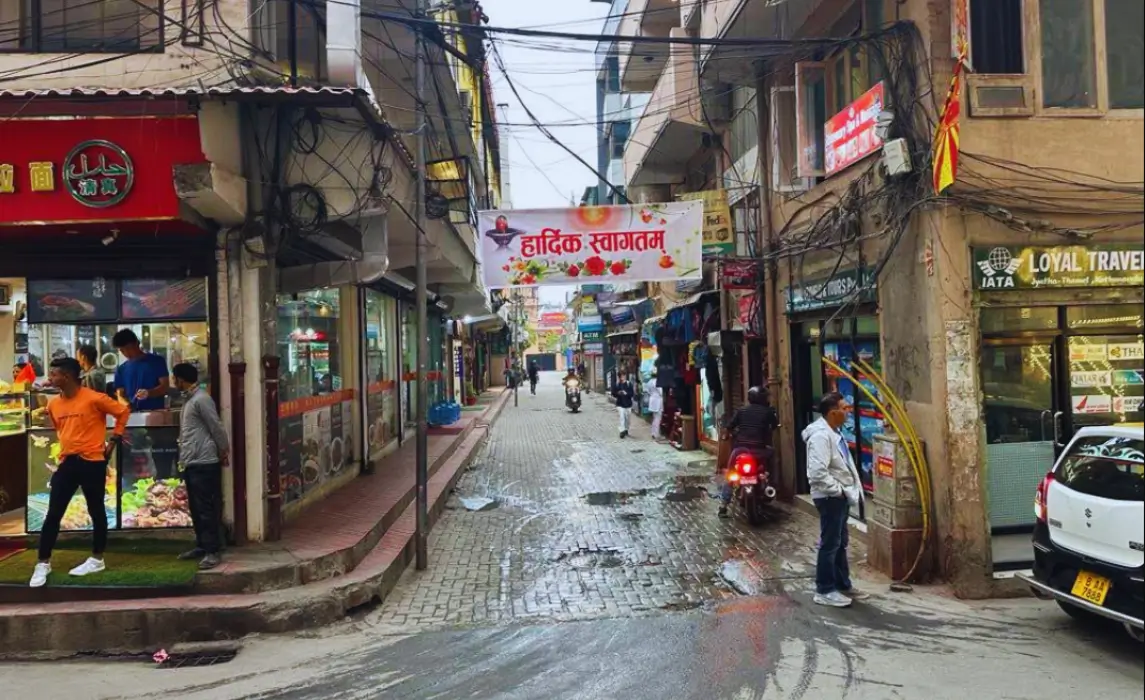
The best things to buy in Nepal are the ones you can trace back to a maker: a hand-knotted Tibetan carpet, a dhaka weave from the hills, a notebook of lokta paper, a bag of first-flush Ilam tea. The five stores below are all searchable by name on Google Maps, sit inside the Kathmandu Valley, and each solves a different shopping problem, from fixed fair-trade prices to buying where locals buy.
One thing most shopping guides skip: Thamel's lanes are full of the same machine-made bowls and "pashmina" sold at tourist markups. The shops here were picked because they either make what they sell, sell at fixed prices, or put the money back into a specific community.
What's worth buying, and what to pay
Use this as your price reference before you walk into any shop. The last column points to the store below that does that item best.
Skip anything sold as an "antique": genuine objects over 100 years old need Department of Archaeology clearance to leave Nepal, and most so-called antiques are aged in a back room anyway.
1. Mahaguthi – Craft with a Conscience (Kupondole, Lalitpur)
Go here if you want to buy gifts for ten people in one hour without haggling once. Mahaguthi is a fixed-price fair-trade store, so the tag is the price, and it is a fair one.
What sets it apart: Mahaguthi was founded by a Nepali disciple of Mahatma Gandhi and began in 1984 as an outlet for fabric woven by women at an ashram, with its first small shop inside the palace courtyard of Patan Durbar (case study). It is a WFTO-guaranteed Fair Trade Organization, so you are not relying on a sales pitch to know the makers were paid properly. It also stocks Mithila (Janakpur) paintings, a folk art from Nepal's southern plains that most Thamel shops never carry.
What to buy and what it costs (approx.):
Dhaka topi or scarf, NPR 500–2,500 ($3–17). Dhaka is a hand-loomed cotton cloth with bold geometric patterns woven straight into the fabric, a craft associated with Palpa and Tehrathum. The topi is the cap Nepali men wear on formal days, which makes it a gift with a story.
Lokta paper journal, NPR 250–900 ($2–6). Lokta paper is pressed by hand from the inner bark of a Himalayan shrub that grows back after harvest. The sheets are thick, fibrous and surprisingly strong, and journals, cards and photo albums pack flat.
Mithila painting, NPR 1,500–8,000 ($10–55). These are bright, line-heavy folk paintings of gods, fish, birds and village life, traditionally made by women in the Janakpur region on Nepal's southern plains.
Wooden toys and ceramics, NPR 400–3,000 ($3–20). Hand-painted animals, simple puzzles and glazed mugs and bowls come from small valley workshops. They are the easy buys for children and for filling the last gap in a suitcase.
Make the trip count: Kupondole Road is the valley's fair-trade strip. Dhukuti, the three-floor shop of the Association for Craft Producers, and Sana Hastakala, known for hand-printed textiles and felt, are both a few minutes' walk away (Lonely Planet). Do all three in one morning, then walk 20 minutes south to Patan Durbar Square.
Good to know: Cloth labels are stitched on firmly; ask staff to remove them on delicate scarves rather than tearing them off yourself. Cards are usually accepted, but carry rupees for the smaller shops on the same road.
Read Related Article: San José, Costa Rica Markets: A Visitor's Guide to Mercado Central, the Crafts Market, Borbón and the Flea Market
Explore the best markets in San José, Costa Rica, including Mercado Central, the Crafts Market, Borbón, and the Flea Market, with tips on what to buy and where to go.
Read More
2. Jawalakhel Handicraft Centre (Ekantakuna, Lalitpur)
This is where you buy a carpet after watching it being made. Weavers sit at upright looms, older women spin wool by hand, and the showroom is upstairs from the work.
What sets it apart: It is the cradle of Nepal's hand-woven carpet industry. The Swiss Red Cross and Swiss technical aid set it up in 1960 to give Tibetan refugees work (Nepali Times), and carpets later became one of Nepal's biggest exports. It still runs as a community co-op that has historically funded day care, health care, pensions and paid leave for its workers (tibet.net). No other shop on this list lets you meet the person whose hands made your rug.
What to buy and what it costs (approx.):
Hand-knotted Tibetan carpet, about NPR 75,000 ($500) for 1.8 m × 90 cm. Each carpet is knotted by hand from wool that is spun and dyed on site, using traditional motifs like dragons, lotuses and snow lions or plain modern designs. Price is worked out per square metre and by knot density (60, 80 or 100 knots per inch); a traditional size runs around US$500.
Sitting mats and saddle rugs, from about NPR 15,000 ($100). These small square or oblong rugs were made to sit on or lay over a horse's saddle. Today they work as bedside rugs or wall hangings and fit in a suitcase.
Cashmere and yak-wool shawls, about NPR 3,000–12,000 ($20–80). The shawls are sold at fixed prices in the same building. Yak wool is coarser and warmer; cashmere is softer and lighter. This is the easiest place in the valley to buy one without wondering if it is acrylic.
Good to know:
Go on a weekday morning, when the looms are busiest. Listed hours are Monday to Friday, 9 am–5 pm, but confirm on Google Maps before you go. The building was badly hit by the 2015 earthquake and still looks worn; that reflects a hard decade for the business, not poor quality, and is a good reason to buy here.
If a carpet won't fit your luggage, ask them to ship it, and get the cost, insurance and delivery time in writing. Afterwards, walk through the Tibetan settlement next door for prayer flags, small tea shops and a much quieter feel than Boudha.
3. Kumbeshwar Technical School (Kumbeshwar, Patan)
This is the place for warm things: hand-knitted sweaters, socks, mittens and hats you will actually wear on a trek or back home in winter. It is a small showroom inside a working school, not a store dressed up as one.
What sets it apart: Every rupee here supports a free nursery and primary school, an orphan home and a day-care centre. The school was set up in 1983 by Siddhi Bahadur Khadgi for Patan's Pode community, traditionally street sweepers and historically ranked at the bottom of the caste system (KTS annual report; Global Inch). It is a WFTO-guaranteed fair-trade member, and its knitwear is sold abroad by fair-trade retailers such as Ten Thousand Villages, usually at several times the Patan price. You are buying at the source.
What to buy and what it costs (approx.):
Wool hats and mittens, NPR 600–1,500 ($4–10). These are knitted by hand from thick local wool, often in bright stripes or with fleece linings. They're the most practical buy here if you are heading to Everest or Annapurna.
Sweaters and cardigans, NPR 2,500–5,000 ($17–33). Dense, hand-knitted pullovers and cardigans in natural and dyed wool. Each one is slightly different, and they last for years.
Allo and banana-fibre pieces, slightly higher. Allo is a fibre spun from Himalayan giant nettle: tough, breathable and a little rough at first, softening with wear. KTS also works with hand-spun banana and silk yarn (WFTO profile), which you won't find in Thamel.
Small rugs and wooden items, well under big-showroom prices. Trainees in the carpet and carpentry workshops make hand-knotted rugs, small stools and boxes, sold in the same room.
Good to know:
The selection is small and changes with what the trainees are making, so treat it as a bonus stop rather than your only knitwear shop. Hours follow the school's working day, so check Google Maps and avoid public holidays. Kumbeshwar Temple, one of only two five-roofed temples in the valley, is two minutes away, and Patan Durbar Square is a 10-minute walk south.
4. Bhat-Bhateni Supermarket (several branches; Tangal or Maharajgunj is closest to Thamel)
Buy your tea, spices and edible souvenirs here, on your last day, at the same printed price a Kathmandu family pays. A 100 g pack of Ilam tea that costs NPR 300 here can be NPR 800–1,200 in a Thamel tea shop with nicer packaging.
What sets it apart: It is Nepal's biggest retail chain, opened in 1984 as a one-room store near the Bhat-Bhateni temple (Wikipedia). Many branches were burned or looted during the September 2025 Gen Z protests, and the company has spent the year since rebuilding. The Tangal flagship was due to reopen on 21 September 2026 (Onlinekhabar), and by late September 10 of the 12 worst-hit outlets were trading again, with only Damak and Hetauda, both outside the valley, still to come (Kathmandu Post). Shopping here is a small, direct way to back a Nepali business that refused to close.
What to buy and what it costs (approx.):
Ilam or Kanyam tea, NPR 250–700 ($2–5) per 100 g. These orthodox black and green teas come from estates in Nepal's eastern hills, on the same slopes as Darjeeling just across the border. Check the label for the flush: first flush (spring) is lighter and pricier, second flush (summer) is fuller and maltier.
Timur pepper, NPR 100–300 ($1–2) a pack. Timur is a Himalayan relative of Sichuan pepper with a citrusy, tingling bite. Nepalis use it in tomato chutney and pickles, and almost no one outside the region sells it.
Chhurpi, NPR 200–600 ($1–4). Chhurpi is hard, smoked yak or cow cheese that people chew slowly like a sweet. It is also sold abroad as a long-lasting dog chew, so it is a fun gift for pet owners.
Lapsi candy, honey and Nepali coffee, NPR 150–1,200 ($1–8). Lapsi is a sour Himalayan fruit made into sweet-tangy candy. Wild Himalayan honey and coffee from Gulmi and Nuwakot round out a food gift box.
Good to know:
The upper floors sell clothes and homeware, but the ground floor is what you came for. Pack spices and honey in checked luggage, and declare food on arrival where your country requires it; Australia and New Zealand are strict. For a late flight, the Radhe Radhe branch in Bhaktapur now runs a 24-hour grocery floor (Onlinekhabar).
Read Related Article: Best Kuala Lumpur Night Market Guide for Street Food Lovers
Discover the best night markets in Kuala Lumpur for street food, local snacks, authentic Malaysian flavors, shopping, and an unforgettable evening experience.
Read More
5. Patan Industrial Estate (Lagankhel, Lalitpur)
This is where serious buyers of Buddha statues and singing bowls go. The name sounds dull, but it is a compound of workshop showrooms where you can see metal being cast, chased and polished before you pick a piece.
What sets it apart: Patan's craftsmen still use the lost-wax casting and repoussé techniques that built the valley's temples, and the estate is the Nepal Tourism Board's own pick for metal craft, woodcarving, carpets and thangka (NTB). Much of the metalwork comes from Okubahal, a Patan neighbourhood that has produced the valley's best metalsmiths for generations (Hotel Shanker). Nepal-made statues sell at a premium online in China and beyond (Nepali Times); here you see the same work without the middlemen.
What to buy and what it costs (approx.):
Hand-hammered singing bowl, NPR 3,500–20,000 ($23–135) for 12–20 cm. A singing bowl is a bronze bowl that hums when struck or when a wooden stick is rubbed around its rim, used for meditation and sound therapy. Hand-hammered bowls show small dents inside and ring longer than smooth, machine-spun ones.
Copper or bronze statue, NPR 8,000–30,000 ($55–200) for 15–20 cm. Most are Buddhas, Taras and Hindu deities cast in the lost-wax method, where a wax model is coated in clay, melted out and replaced with molten metal. Fire-gilding and a hand-painted face can double the price.
Repoussé panels, butter lamps and ritual objects, NPR 2,000–15,000 ($13–100). Repoussé is metal hammered from the back to raise a design, the technique behind Patan's temple doors and roof struts. Butter lamps and ritual bells are smaller and easy to pack.
Carved wooden windows and masks, from NPR 3,000 ($20). Newar woodcarvers here make miniature versions of the latticed windows you see around Durbar Square, along with deity masks for walls.
Good to know:
Showrooms open roughly 10 am–5 pm, and weekday mornings are when you'll see artisans working. Prices are negotiable but not wildly inflated, so 10–15% off is a fair ask; half is not.
Before buying a bowl, have it struck and listen. A good one hums for 30 seconds or more and sings evenly when the rim is rubbed. Treat "seven-metal" or "antique" claims as sales talk. For larger statues, ask for a receipt stating the piece is newly made, since airport customs may check that it isn't a heritage object.
Before you go: tips that save money and hassle
Do four stores in one day. Four of the five sit in Lalitpur, so a weekday loop works well: Kumbeshwar Technical School at 10 am, lunch near Patan Durbar Square, Mahaguthi on Kupondole Road, then a taxi south to Jawalakhel and the Industrial Estate before 4 pm. Leave Bhat-Bhateni for your last evening, when you know how much bag space is left.
Mind Saturday. It is Nepal's weekly holiday. Workshops and the carpet centre are quiet or closed, so you won't see anyone making anything.
Carry rupees. Fixed-price shops and supermarkets take cards, but smaller workshops prefer cash and some add a 2–4% card fee. A local ATM withdrawal is usually capped at NPR 25,000–35,000 (about $165–235) per transaction, so plan big purchases ahead.
Ship, don't haul. Carpets and heavy statues are cheaper to ship than to pay excess baggage on. Use a shop that ships often, insist on insurance, photograph the item before it is packed, and keep the invoice for your home customs.
Pack smart. A khukuri (the curved Gurkha knife, NPR 2,500–10,000 or $17–65 for a real working one) goes in checked luggage only. Singing bowls and statues should travel in hand luggage, wrapped in clothes, because a dent ruins a bowl's tone.
Bargain gently. Haggling is normal in Thamel and at workshops, never at fixed-price fair-trade stores or supermarkets. Start around 30% below the asking price for street goods, settle with a smile, and remember the difference is often less than a coffee back home.
FAQs
Is Thamel worth shopping in at all?
Yes, for trekking gear, cheap clothing and browsing, and its late opening hours suit an evening stroll. For anything you want to last, such as carpets, metalwork, shawls or fair-trade crafts, the Patan-side shops above give better quality for the money and tell you who made the piece.
How can I tell real pashmina from fake?
Check the label for the "Chyangra Pashmina" trademark, used by Nepal's pashmina industry for certified Himalayan goat cashmere. Real pashmina feels warm within seconds, has a slightly fuzzy, matte surface, and costs at least NPR 3,000 ($20) for a blended shawl. If it is very shiny, slippery and under NPR 1,000 ($7), it is almost certainly acrylic or viscose.
Can I pay in US dollars?
Some tourist shops will take dollars, but they set their own exchange rate, which usually costs you 5–10%. Paying in rupees is almost always cheaper, and every store in this guide prices in rupees.
How much should I budget for souvenirs?
About NPR 7,500 ($50) covers tea, spices, lokta notebooks and a few dhaka caps for 8–10 people. Around NPR 30,000 ($200) adds a good shawl, a hand-hammered singing bowl and a small statue. A hand-knotted carpet is a separate budget of NPR 60,000 ($400) and up, plus shipping.