Read Related Article: The Sapa Market Guide: Every Market, Shop & Street Food Stop in Vietnam Worth Knowing
Explore Sapa’s markets, hidden shops, and street food gems. Your complete Vietnam guide to what to buy, eat, and experience.
Read More
.webp)
Hawaii, a tropical paradise located in the Central Pacific, is renowned for its breathtaking natural beauty, including pristine beaches, lush rainforests, and dramatic volcanic landscapes. Comprising a chain of islands, each with its own distinct character, Hawaii offers a diverse range of experiences for visitors. The island of Oahu is home to the vibrant city of Honolulu and the historic Pearl Harbor, while Maui boasts stunning beaches and the scenic Hana Highway. The Big Island, known as Hawaii Island, features active volcanoes in Hawaii Volcanoes National Park and majestic waterfalls along the Hamakua Coast. Kauai, often called the "Garden Isle," enchants visitors with its verdant valleys and towering sea cliffs. With its unique blend of Polynesian culture, warm hospitality, and natural wonders, Hawaii offers an unforgettable escape for travelers seeking paradise.
.webp)
.webp)
.webp)
%2520(1).webp)
.webp)
.webp)
.webp)
.webp)
.webp)
.webp)
Nevada, located in the western United States, is renowned for its diverse landscapes, vibrant entertainment, and rich history. The state is most famous for Las Vegas, a global entertainment capital known for its bustling casinos, world-class shows, and vibrant nightlife. Beyond the glitz of Las Vegas, Nevada offers stunning natural beauty, including the rugged terrain of the Mojave Desert, the alpine scenery of Lake Tahoe, and the striking rock formations of Red Rock Canyon and Valley of Fire State Park. The state capital, Carson City, along with historic towns like Virginia City, reflect Nevada's storied past rooted in the mining boom of the 19th century. With its blend of high-energy urban centers, expansive deserts, and scenic mountains, Nevada provides a unique and captivating experience for residents and visitors alike.
.webp)
.webp)
.webp)
.webp)
.webp)
.webp)
.webp)
.webp)
.webp)
.webp)
Florida, situated in the southeastern United States, is renowned for its sunny weather, sandy beaches, and vibrant culture. The state is home to world-famous tourist destinations like Walt Disney World Resort in Orlando, the Everglades National Park, and the vibrant art deco architecture of Miami Beach. With its diverse population, Florida boasts a rich cultural tapestry influenced by Latin American, Caribbean, and Southern traditions. Its economy is driven by industries such as tourism, agriculture, aerospace, and technology. Florida's natural beauty, outdoor recreational opportunities, and lively entertainment scene make it a popular destination for residents and visitors seeking fun in the sun.
.webp)
.webp)
.webp)
.webp)
.webp)
.webp)
.webp)
.webp)
.webp)
.webp)
A Traveller's Guide to Souvenirs, Food, Design & Art
Few countries pack this much into such a small space. The Netherlands has a gift for producing things that are genuinely worth buying, food shaped by centuries of trade, crafts that have barely changed since the Golden Age, and design that is quietly some of the best in Europe. This guide cuts through the tourist noise and tells you what is actually worth your money, where to find it, and what to expect to pay.
The Dutch food culture runs deeper than most visitors expect. A nation built on trade brought spices, techniques, and ingredients from across the world, and then did something distinctly its own with all of them. Here is what to bring home.
The Netherlands produces around 650 million kilograms of cheese per year, making it one of the world's largest exporters, but the versions that leave the country commercially are rarely the ones worth buying. The real difference is age and provenance.
Gouda is the name most travellers know, but it is almost meaningless without a maturity designation. Jong (young) Gouda is mild and rubbery; Oud (aged, 12+ months) is crystalline, nutty, and entirely different. Extra oud (18+ months) develops a caramel depth that has nothing to do with the supermarket version sold abroad. Leyden cheese, made with cumin seeds and a protected regional designation, is harder to find internationally and worth seeking out specifically.
Where to buy: A dedicated kaaswinkel (cheese shop) will always beat a market tourist stall. In Amsterdam, Reypenaer on Singel offers guided tastings of aged Gouda with wine pairings, unusual, genuinely educational, and a far better experience than grabbing a wheel off a market table. In Gouda itself, the Goudse Waag market (Thursday mornings, April to August) is the real thing: producers, not resellers.
What to pay: Aged Gouda from a good cheese shop runs €3–6 ($3.30–6.60) per 100g. A 200g wedge of extra-aged, enough to share as a gift, costs €8–14 ($8.80–15.40). Avoid any pre-wrapped block under €2 per 100g; the quality will show.
Customs note: Hard, aged cheeses generally travel well in checked luggage. Most countries allow personal quantities of hard cheese. Soft cheeses are more restricted, check your destination country's rules before buying.
Explore Sapa’s markets, hidden shops, and street food gems. Your complete Vietnam guide to what to buy, eat, and experience.
Read MoreThe stroopwafel was invented in Gouda in the early 19th century by a baker named Gerard Kamphuisen, who pressed leftover crumbs into thin waffle rounds and glued them with a caramel-syrup filling. The original recipe is still the template for every version made today.
The difference between a fresh market stroopwafel and a packaged one is not subtle, it is the difference between a warm, yielding caramel centre and a stiff, brittle disc. At a good market stall, the waffle is made to order on a cast-iron press and handed to you warm. Rest it on top of a hot coffee for 30 seconds to soften the caramel further; this is how the Dutch eat them.
What to pay: Fresh stroopwafels from a market stall cost €1.50–2.50 ($1.65–2.75) each. Packaged boxes (10–12 waffles) for gifts run €4–8 ($4.40–8.80) at a proper stroopwafel shop; the same box in an airport costs considerably more. The Stroopwafel Shop in Amsterdam's Nine Streets area sells single-origin and flavour-variant versions (salted caramel, dark chocolate) that make more interesting gifts than the standard supermarket variety.
Speculaas is a spiced shortcrust biscuit that most of the world encounters only in December, but in the Netherlands, it is a year-round staple eaten with coffee at any time of day. The spice blend (speculaaskruiden) varies by region and baker but typically includes cinnamon, cloves, ginger, nutmeg, cardamom, and white pepper. The combination is warming without being sweet, which explains why it pairs so naturally with coffee.
The most recognisable form is the speculaaspop, a flat, windmill-shaped biscuit sold in every Dutch supermarket. Better versions come from specialist bakeries and spice shops that sell the kruiden blend itself, which travels easily and lets you replicate the flavour at home.
What to pay: A 400g bag of quality speculaas from a bakery or deli runs €3–5 ($3.30–5.50). A tin of artisan speculaas, a better gift option, costs €8–15 ($8.80–16.50). The spice blend itself (speculaaskruiden) sells for €2–4 ($2.20–4.40) per packet at most Dutch supermarkets and spice shops.
Drop deserves honest preparation: Dutch licorice is not the mild, sweet confection sold in most countries. The Dutch version ranges from mildly sweet to aggressively salty, and the salty end (zoute drop) contains ammonium chloride, which produces a sharp, almost medicinal taste that is completely unlike anything outside Scandinavia and the Netherlands.
The Dutch consume an average of 2 kilograms of drop per person per year, more than any other nation, and the variety available is extraordinary. Shapes range from coins and cats to herring and traffic cones. A mixed bag from a dedicated dropwinkel (licorice shop) lets you try the spectrum before committing to a larger purchase.
What to pay: A 200g bag of mixed drop from a market or sweet shop costs €2–4 ($2.20–4.40). Specialty shops like De Peperstoof in Amsterdam's Jordaan sell curated selections by flavour and intensity, with individual pieces from €0.20–0.50 ($0.22–0.55) each, useful for tasting before buying. A gift tin of assorted drop runs €8–12 ($8.80–13.20).
Jenever is the drink that gin was based on. When English soldiers fighting in the Netherlands in the 17th century brought distilled Dutch spirit home with them, it eventually evolved into London dry gin, but the original is a different product entirely. Where gin is clean and botanical, jenever is richer, slightly malty, and considerably more complex.
The distinction between jonge (young) and oude (old) jenever refers to the distillation method rather than the age of the spirit. Oude jenever, made with a higher proportion of malt wine, is the more characterful of the two, rounder, warmer, and better for sipping. Jonge is cleaner and more approachable for those used to gin.
Where to try before you buy: A proeflokaal (tasting house) is the traditional setting. In Amsterdam, Wynand Fockink, operating since 1679 near Dam Square, offers jenever flights in their historic tasting room for around €10–15 ($11–16.50). Buying a bottle directly from a proeflokaal ensures quality and often offers expressions unavailable elsewhere.
What to pay: A 500ml bottle of good-quality jonge jenever costs €12–20 ($13.20–22) from a specialist. Aged or premium expressions run €25–50 ($27.50–55). Avoid the cheap bottles sold in tourist shops near Central Station, they are neither traditional nor particularly drinkable.
There is no elegant way to explain hagelslag to someone who hasn't encountered it: it is chocolate sprinkles, eaten on buttered bread, for breakfast, by adults, without irony. The Dutch have been eating it this way since the 1930s and show no signs of stopping.
What makes Dutch hagelslag worth buying is the quality of the chocolate. The Dutch standard requires a minimum of 32% cocoa in dark chocolate hagelslag, significantly higher than the decoration sprinkles sold elsewhere, which often contain very little actual chocolate. The result is a product that tastes genuinely of cocoa rather than sugar and colouring.
What to pay: A 400g box of quality hagelslag (Venz or De Ruijter are the reliable brands) costs €2–3.50 ($2.20–3.85) from a supermarket. Specialty varieties, dark chocolate, milk chocolate with sea salt, or white chocolate, run €3–5 ($3.30–5.50). It packs flat, weighs almost nothing, and is one of the best-value gifts available.
Heineken is brewed in Amsterdam and is perfectly drinkable, but it represents about 1% of what Dutch brewing actually looks like today. The Netherlands has seen a significant craft beer expansion over the past decade, with Amsterdam alone now home to dozens of independent breweries producing IPAs, saisons, stouts, and barrel-aged ales of genuine international quality.
Breweries worth seeking out: Brouwerij 't IJ, housed inside a working windmill in Amsterdam-Oost, produces seven core beers and a rotating seasonal range, their IJwit wheat beer and Zatte tripel are both excellent. Jopen from Haarlem makes traditional Dutch recipes including a recreation of a 15th-century Amsterdam beer brewed with herbs instead of hops. Leidsch Bier from Leiden produces small-batch ales that are rarely exported.
What to pay: A 330ml bottle from a craft brewery costs €2.50–4 ($2.75–4.40) from a specialist beer shop. A mixed six-pack runs €15–22 ($16.50–24.20). Most specialist beer shops will help you build a custom selection for gifting. Check airline liquid rules before packing, bottles must be in checked luggage, sealed, and ideally wrapped.

Discover the best hardware stores in Poland for home improvement—top shops, tools, materials, and where to buy quality supplies.
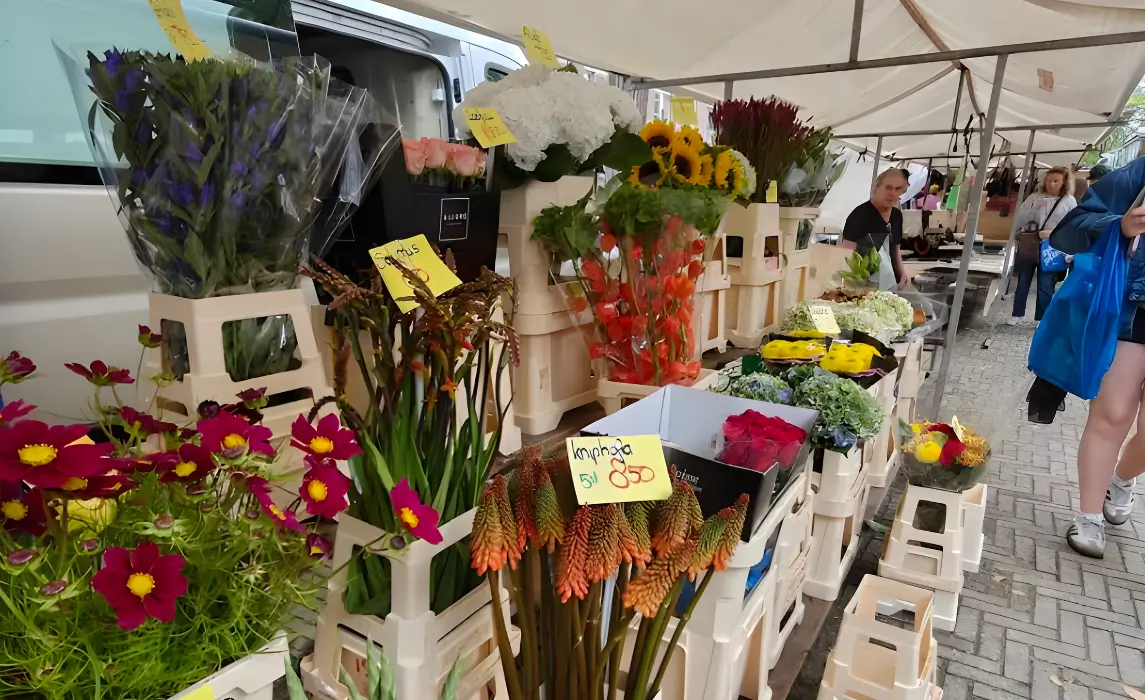
Read MoreThe Netherlands controls the global flower trade in a way that few industries in any country dominate their market. The Dutch flower auction at Aalsmeer, FloraHolland, is the largest flower auction in the world by both volume and value, handling approximately 12 billion flowers per year. What that means for the visitor is simple: flower quality in the Netherlands is uniformly exceptional, and prices are lower than almost anywhere else in Europe.
The tulip arrived in the Netherlands from the Ottoman Empire in the 16th century and promptly triggered one of history's first recorded speculative bubbles, Tulipmania of the 1630s, during which single bulbs sold for the price of a canal house. The market collapsed, but the Dutch love of tulip cultivation never did.
Buying bulbs to take home is entirely viable, but the rules matter. Bulbs exported from the Netherlands for personal import must come with a phytosanitary certificate, which licensed vendors provide automatically. Unlicensed bulbs purchased from street markets or tourist kiosks carry no such documentation and may be confiscated at customs, or worse, carry plant diseases that some countries quarantine against.
Where to buy: The Bloemenmarkt on Amsterdam's Singel canal is the city's most famous flower market and sells certified bulbs with the appropriate documentation. For a wider selection at better prices, go directly to the source: the bulb fields around Lisse and Hillegom (near Keukenhof) have farm shops and roadside sellers who sell certified bulbs directly from April through May.
What to pay: A bag of 10 certified tulip bulbs costs €5–12 ($5.50–13.20) depending on the variety. Rare or heritage varieties, parrot tulips, black tulips, rembrandt varieties, run €15–30 ($16.50–33) for 10 bulbs. The price difference between a licensed market seller and a street stall is usually small; the risk difference is not.
Dried flower arrangements have become one of the Netherlands' most practical export souvenirs, they are legal to take across almost any border, require no special documentation, survive luggage handling, and look exactly the same six months after you get home as they did when you bought them.
The best dried arrangements incorporate Dutch field flowers, strawflowers, statice, nigella seed heads, and Dutch lavender, alongside more structured botanicals. Several Amsterdam florists specialise in dried arrangements; the Jordaan neighbourhood has the highest concentration of quality independent florists.
What to pay: A small dried posy costs €8–15 ($8.80–16.50). A larger statement arrangement suitable for display runs €20–45 ($22–49.50). Ask the florist to pack it in a box rather than wrap it in paper if you are flying, the structure survives much better.
Seeds are the most underrated souvenir category in the Netherlands and one of the most genuinely rewarding long-term purchases. Dutch specialty flower shops carry heirloom seed varieties, including windflower strains, heritage poppies, and Dutch field flower mixes, that are either unavailable or significantly more expensive outside the country.
Seeds are legal to transport across most international borders in personal quantities, take up almost no luggage space, and cost very little. A packet of Dutch field flower seeds is a gift that produces results for years.
What to pay: Seed packets from specialty flower shops cost €2–5 ($2.20–5.50) each. Gift sets of 5–8 curated packets run €12–20 ($13.20–22) and make excellent presents for gardeners.
The story of Dutch ceramics is inseparable from the story of trade. When the Dutch East India Company's Chinese porcelain imports were disrupted in the early 17th century, Delft's existing tin-glazed earthenware industry pivoted, adopting the blue-and-white aesthetic of Chinese porcelain and developing an entirely new craft tradition that eventually surpassed its inspiration in both quality and reputation.
Hand-painted Delftware is one of the most copied souvenirs in the world. The shelves of Amsterdam's tourist shops are filled with convincing-looking blue-and-white ceramics manufactured cheaply in China and Portugal with no connection to Delft whatsoever. Buying genuine Delftware requires knowing exactly what to look for.
The authentic mark is the three-part signature on the base of every genuine piece from De Porceleyne Fles (Royal Delft), established in 1653 and the only original Delft factory still operating. It shows a stylised "JT" monogram, a small pot, and the word "Delft." Every piece is hand-painted on-site in Delft, and the factory offers tours of the painting studios where visitors can watch the process.
Genuine Delftware uses a tin-oxide glaze over terracotta bisque ware, painted freehand with cobalt-blue pigment before a second firing. The depth and slight variation in the brushwork is visible up close and is what distinguishes hand-painted originals from decal-printed imitations.
What to pay: Small tiles and coasters from Royal Delft start at €15–25 ($16.50–27.50). A hand-painted plate runs €45–120 ($49.50–132). Larger decorative vases or complete pieces start at €150+ ($165+). Tourist-shop imitations are often priced at €5–15, a price that no hand-painted, Dutch-made ceramic can match, which is itself the tell.
Where to buy: The Royal Delft factory shop in Delft is the most reliable source. In Amsterdam, Galleria d'Arte Rinascimento on Prinsengracht stocks authenticated pieces with full provenance documentation.
Makkum pottery from the Frisian town of the same name has been produced by Royal Tichelaar since 1572, making it older than Royal Delft and arguably the most storied ceramics tradition in the Netherlands. Where Delftware is predominantly decorative and formal, Makkum pieces lean warmer: polychrome glazes in terracotta oranges, sage greens, and deep yellows alongside the classic blue-and-white palette.
Makkum has collaborated with contemporary Dutch designers including Hella Jongerius, producing limited-edition pieces that sit between traditional craft and contemporary design. These collaboration pieces are particularly collectible and represent a more unusual and design-forward purchase than standard Delftware.
What to pay: Entry-level Makkum pieces start at €30–60 ($33–66). Mid-range decorative plates and bowls run €80–200 ($88–220). Limited-edition designer collaboration pieces are priced individually and often sell out quickly. The Royal Tichelaar factory in Makkum offers tours and sells directly, worth the two-hour drive from Amsterdam for serious ceramics buyers.
Explore authentic Peruvian souvenirs, from alpaca textiles to artisan crafts—perfect keepsakes and gifts from Peru.
Read MoreDutch design has a philosophical backbone that most countries' fashion industries lack. Shaped by Calvinist pragmatism, mercantile confidence, and a genuinely flat social structure, the Dutch have little appetite for status-display fashion, the result is clothing and objects that are functional, well-made, and designed to last rather than impress.
The brands that originated in the Netherlands and built global reputations did so by making things that worked rather than things that signalled. Scotch & Soda, founded in Amsterdam in 1985, produces menswear and womenswear built on unexpected fabric combinations and relaxed tailoring, the Amsterdam flagship on Koningsplein carries exclusive colourways unavailable elsewhere. G-Star Raw pioneered raw denim construction and continues to produce technical denim in Amsterdam. Filling Pieces, a newer Amsterdam label, makes premium sneakers and leather goods with a minimalist aesthetic that has attracted a genuinely cult following in sneaker circles.
Beyond these names, the Nine Streets (De Negen Straatjes) neighbourhood, nine short streets crossing the main canal belt, houses the densest concentration of independent Dutch designers in the country. Labels like Daniëlle Cathari, Daily Paper, and Van Slobbe Van Benthum are worth finding specifically; they are not widely exported.
What to pay: Scotch & Soda shirts run €60–120 ($66–132); jackets €150–300 ($165–330). Filling Pieces sneakers start at €180–250 ($198–275). Independent Nine Streets designers vary widely, expect €40–80 ($44–88) for shirts, €100–200 ($110–220) for outerwear. Sales in January and July offer 30–50% reductions across most Dutch fashion retail.
Klompen are not purely a tourist artefact. Dutch agricultural workers, particularly in horticulture and dairy farming, still wear them daily, they are waterproof, warm, and provide better foot protection than any rubber boot. The Dutch clog-making tradition is protected under UNESCO's Intangible Cultural Heritage list, and several workshops still produce them entirely by hand from willow or poplar wood.
For visitors, the choice is between decorative miniatures (the standard gift shop option) and full-sized functional pairs. Full-sized klompen require sizing, your foot should fill the clog completely with no gap at the toe, and need a break-in period. Several workshops outside Amsterdam, including Kooijman Souvenirs in Volendam and De Zaanse Schans workshops near Zaandam, demonstrate the full production process and sell directly.
What to pay: Decorative miniatures cost €3–10 ($3.30–11) depending on size and painting. Full-sized plain wooden clogs from a workshop run €25–45 ($27.50–49.50). Hand-painted decorative full-sized pairs cost €50–100 ($55–110). Avoid the mass-produced plastic-coated versions sold in airport shops, they are neither functional nor traditional.
Amsterdam has more bicycles than residents, approximately 900,000 bikes in a city of 870,000 people, and the infrastructure built around that culture has produced a remarkably sophisticated retail ecosystem. Dutch cycling gear prioritises practicality and longevity over the technical performance focus of cycling shops in other countries.
What makes Dutch cycling accessories worth buying is the design approach: saddle bags by Basil (Amsterdam-based, since 1982) are made from waxed cotton or leather and are designed for daily urban use rather than sport. Cortina bicycles and their accessory range produce classic Dutch city-bike components, wide handlebars, leather grips, dynamo lighting, that are impossible to find in equivalent quality elsewhere. Bobbin and VanMoof accessories are more contemporary but equally Dutch in their emphasis on clean aesthetics.
What to pay: A quality leather saddle bag runs €45–90 ($49.50–99). Waxed cotton panniers cost €60–120 ($66–132). A quality Dutch city-bike bell, the kind with a deep, resonant tone rather than a tinny ping, costs €15–35 ($16.50–38.50). Amsterdam's Fietsfabriek and Brilliant Bikes in the Jordaan neighbourhood stock the best curated selection of accessories.
The Dutch Golden Age produced Rembrandt, Vermeer, Frans Hals, and Jan Steen within a single generation, a concentration of artistic genius explained partly by the fact that the Netherlands was the wealthiest nation on earth in the 17th century, with a merchant class that bought paintings the way other cultures bought status symbols. The legacy of that period is accessible today in three museum shops that are genuinely among the best in Europe.
The Rijksmuseum shop operates as a separate curatorial project from the museum itself, and the quality reflects that. Rather than licensing Vermeer and Rembrandt images onto generic merchandise, the shop produces its own editions: Vermeer's The Milkmaid printed on museum-grade Hahnemühle paper using archival inks, or Rembrandt's Night Watch reproduced in formats ranging from A4 to 1.5 metres wide using the museum's own high-resolution scans.
The design object range, notebooks, scarves, ceramics, and glassware, draws directly from the collection's decorative arts holdings rather than from the paintings, which produces more unusual and less predictable results. A notebook whose cover reproduces a 17th-century Dutch tile pattern is a more interesting purchase than a tote bag with Vermeer's face on it.
What to pay: Art prints start at €10–25 ($11–27.50) for standard sizes; large-format museum-grade reproductions run €80–250 ($88–275). Design objects cost €12–60 ($13.20–66). Exhibition catalogues are €25–45 ($27.50–49.50) and are genuinely scholarly publications, not coffee-table padding. The shop is accessible without a museum ticket, which makes it worth visiting independently.
The Van Gogh Museum's shop is unusual in that it functions as the primary commercial arm of the museum's own publishing programme. The museum holds the world's largest Van Gogh collection, over 200 paintings and 500 drawings, and its publications draw on access to those originals that no other publisher can replicate.
The catalogue raisonné volumes, comprehensive scholarly records of Van Gogh's complete output, are the most authoritative available and are sold here at museum prices considerably below the secondary market. For art lovers, these are purchases that retain both intellectual and monetary value. The shop also produces its own limited-edition print runs of lesser-known works from the collection: not Sunflowers or Starry Night, which are reproduced everywhere, but drawings and letters that reveal the texture of Van Gogh's creative process.
What to pay: Standard art prints run €12–30 ($13.20–33). Limited-edition prints from the museum's own programme cost €60–200 ($66–220) and are numbered. Scholarly publications range from €35–120 ($38.50–132). The museum shop, like the Rijksmuseum's, is accessible without a gallery ticket.
FOAM, Fotografiemuseum Amsterdam, occupies a converted canal house on the Keizersgracht and focuses exclusively on contemporary and 20th-century photography. Its publishing arm, FOAM Editions, produces exhibition catalogues and monographs for every major show, many of which become collectible within a few years of publication.
What makes FOAM publications worth buying is the print quality and editorial rigour. These are not merchandised reproductions, they are designed publications produced in collaboration with the photographers themselves, often including essays and annotations not available elsewhere. Several FOAM publications, including early editions from photographers like Rineke Dijkstra and Erwin Olaf, now trade on the secondary market at significant premiums above their original prices.
What to pay: Exhibition catalogues cost €25–45 ($27.50–49.50). Limited-edition prints start at €150–400 ($165–440) for signed editions. The FOAM shop is free to enter and worth visiting independently of the museum's exhibitions.

Find the best shopping malls in Bogotá, Colombia, from luxury centers to local favorites—your complete shopping guide.
Read MoreDe Pijp, Amsterdam | Monday–Saturday, 09:30–17:00 | Albert Cuypstraat
Running continuously since 1905, Albert Cuyp is not just Amsterdam's longest street market, it is the beating heart of De Pijp, a neighbourhood that has been the city's most culturally layered for over a century. The market stretches nearly a kilometre along Albert Cuypstraat and is wide enough that you can easily miss an entire row of stalls if you don't slow down.
What makes it genuinely different from other Amsterdam markets is the mix: this is not a curated farmers' market or a themed flea market. It is everything at once, and the locals actually use it. On any given morning you'll find a grandmother debating tomatoes at a produce stall, a chef buying fresh herring three stalls down, and a tourist discovering stroopwafels made to order over a cast-iron waffle press. All of that is happening within twenty metres of each other.
What to buy and what to expect to pay:
Fresh stroopwafels made on the spot run around €1.50–2.50 ($1.65–2.75) each, incomparably better than the packaged version. Kibbeling (battered fried cod, a Dutch street food staple) costs roughly €4–6 ($4.40–6.60) for a generous portion. Dutch cheese sells from approximately €3–5 ($3.30–5.50) per 100g, with vendors offering samples as a matter of course. Clothing and fabric stalls range from budget basics (€5–15 / $5.50–16.50) to quality leather goods and scarves (€20–50 / $22–55). Flowers and arrangements typically run €5–15 ($5.50–16.50) a bunch, which is a fraction of what florists charge.
What sets it apart: Gözleme King is a stall that earns its reputation, fresh hand-stretched Turkish flatbread filled to order, with vegetarian options, for around €6–8 ($6.60–8.80). Bond Fish is another standout; their fried fish is good enough that repeat visits in the same morning are not unusual. The Moroccan nut stand near the eastern end sells flax-seed-coated almonds that are genuinely unlike anything sold elsewhere on the market.
Practical note: Most stalls accept card payment, which is unusual for a traditional street market and makes shopping considerably easier. Come hungry, walk the full length before buying anything, and resist the urge to stop at the first stroopwafel stand you see, the ones deeper into the market are often better.
Jordaan, Amsterdam | Saturdays only, 09:00–16:00 | Noordermarkt Square
The Noordermarkt operates on a split personality that rewards knowing which half you're there for. Saturday mornings (from 09:00 to roughly 12:00) belong to one of Amsterdam's best organic farmers' markets, where producers sell directly to buyers, bread baked that morning, seasonal vegetables, local honey, and raw-milk cheeses that never appear in supermarkets. By early afternoon the market transitions into a vintage and antiques market, with clothing, books, furniture, and curios spread across the square.
The setting matters here in a way it doesn't elsewhere. The Noordermarkt square itself is one of the most beautiful in Amsterdam, framed by the Noorderkerk, a 17th-century church built for the city's working class, the square has a quieter, more intimate atmosphere than larger markets. It draws a strongly local crowd, particularly in the morning, and the pace is noticeably less hurried than Albert Cuyp or Waterlooplein.
What to buy and what to expect to pay:
Organic produce prices are higher than supermarket equivalents but fair for the quality: seasonal vegetables from around €2–4 ($2.20–4.40) per portion, artisan bread €4–7 ($4.40–7.70) per loaf, and farmhouse cheeses from €3–5 ($3.30–5.50) per 100g. At the afternoon vintage market, clothing ranges widely, a vintage belt costs €7–10 ($7.70–11), while a genuine vintage coat can run €40–120 ($44–132) depending on condition and the seller's knowledge of what they have. Street food stalls sell loempia (Dutch spring rolls, introduced via Indonesia's colonial connection) for around €3–5 ($3.30–5.50), an affordable and excellent snack.
What sets it apart: The Noordermarkt's farmers' market section operates on a genuine producer-direct model, which is relatively rare even by European standards. Vendors can usually tell you exactly where something was grown, when it was harvested, and how it was made. For food tourists, that conversation is often as valuable as the purchase. The strawberries, when in season (May through August), are consistently among the best available in the city, perfectly ripe, sold by the punnet for around €3–4 ($3.30–4.40).
Practical note: Bring cash for the morning farmers' market, many smaller producers don't take cards. Arrive before 10:00 to avoid the worst of the crowds and to guarantee access to the best produce. The afternoon vintage section is more relaxed and cards are more widely accepted.
Waterlooplein, Amsterdam | Monday–Saturday, 09:30–17:30 | Waterlooplein Square
Amsterdam's oldest market has occupied Waterlooplein square since 1886, which gives it a legitimate claim to being the city's most historically significant trading ground. Originally the centre of Amsterdam's Jewish merchant community, the market survived the Second World War and re-established itself as the city's primary flea market in the decades that followed. That history is not just a footnote, it shapes what you find here, particularly the depth of genuinely old objects mixed in among the ordinary second-hand stock.
Waterlooplein is the market that requires the most patience and the most honest expectations. A portion of the stalls sell tourist souvenirs and generic second-hand clothing with little curation. But running alongside those are dealers who genuinely know their stock: leather coat and jacket specialists with quality pieces at fair prices, vinyl record stalls with well-organised collections, and vendors selling Dutch antiques, ceramics, glassware, silverware, old maps, that would cost considerably more in a gallery setting.
What to buy and what to expect to pay:
Vintage leather jackets and coats are one of the market's genuine specialities, ranging from €40–150 ($44–165) depending on condition and style, significantly cheaper than comparable pieces in vintage boutiques. Vinyl records sell from €2–15 ($2.20–16.50) with the best stalls organised by genre and era. Dutch ceramics and antique glassware range from €5 ($5.50) for small pieces to €50+ ($55+) for anything genuinely old and well-kept. Second-hand clothing on less curated stalls starts from €5–10 ($5.50–11). Handmade goods from independent makers, jewellery, bags, small leather items, typically run €15–40 ($16.50–44).
What sets it apart: Waterlooplein is the only Amsterdam market where serious haggling is not just accepted but expected. Unlike Albert Cuyp or Noordermarkt, where prices are largely fixed, most stalls here will negotiate, particularly late in the afternoon when vendors are packing up. A polite offer of 70–80% of the asking price is a reasonable starting point on clothing and second-hand goods. The small surrounding permanent shops (which back onto the square) are also worth exploring; several specialise in vintage denim, military surplus, and workwear that attracts buyers from across Europe.
Practical note: The market is noticeably better on Thursdays and Fridays than early in the week, when more stalls are fully open and stocked. Weekday mornings before 11:00 are ideal for serious browsing, by Saturday afternoon the square is crowded and the best pieces are usually gone. Cash is strongly preferred across most stalls, though a growing number accept cards.
Yes, but only if purchased from a licensed vendor who provides a phytosanitary certificate with your bulbs. This documentation is what clears customs in most countries. Bulbs bought from unlicensed street stalls or tourist kiosks carry no paperwork and risk confiscation at the border. Licensed sellers at the Bloemenmarkt in Amsterdam and farm shops around Lisse handle the documentation automatically, so there is nothing extra for you to do.
Flip it over. Every authentic piece from Royal Delft (De Porceleyne Fles) carries a three-part mark on the base: a stylised "JT" monogram, a small pot, and the word "Delft." If that mark is absent, the piece was not made in Delft, regardless of what the label says. Genuine hand-painted Delftware also shows slight variation in the brushwork up close, something machine-printed imitations cannot replicate. As a general rule, if the price is under €15, it is not the real thing.
Buy it in the city. Airport cheese shops carry the same commercial Gouda found in supermarkets worldwide, at a significant markup. For cheese that is actually worth bringing home, aged oud or extra oud Gouda, cumin-studded Leyden, or raw-milk varieties, visit a dedicated kaaswinkel in Amsterdam's Jordaan, or go directly to a market in Gouda or Alkmaar. Hard aged cheese travels well in checked luggage and holds up for days without refrigeration.