Read Related Article: Best Hawaii Souvenirs: Top Hawaiian Gifts to Bring Home
Discover the best Hawaii souvenirs and Hawaiian gifts to bring home, from local treats and crafts to unique keepsakes that capture the spirit of the islands.
Read More
.webp)
Hawaii, a tropical paradise located in the Central Pacific, is renowned for its breathtaking natural beauty, including pristine beaches, lush rainforests, and dramatic volcanic landscapes. Comprising a chain of islands, each with its own distinct character, Hawaii offers a diverse range of experiences for visitors. The island of Oahu is home to the vibrant city of Honolulu and the historic Pearl Harbor, while Maui boasts stunning beaches and the scenic Hana Highway. The Big Island, known as Hawaii Island, features active volcanoes in Hawaii Volcanoes National Park and majestic waterfalls along the Hamakua Coast. Kauai, often called the "Garden Isle," enchants visitors with its verdant valleys and towering sea cliffs. With its unique blend of Polynesian culture, warm hospitality, and natural wonders, Hawaii offers an unforgettable escape for travelers seeking paradise.
.webp)
.webp)
.webp)
%2520(1).webp)
.webp)
.webp)
.webp)
.webp)
.webp)
.webp)
Nevada, located in the western United States, is renowned for its diverse landscapes, vibrant entertainment, and rich history. The state is most famous for Las Vegas, a global entertainment capital known for its bustling casinos, world-class shows, and vibrant nightlife. Beyond the glitz of Las Vegas, Nevada offers stunning natural beauty, including the rugged terrain of the Mojave Desert, the alpine scenery of Lake Tahoe, and the striking rock formations of Red Rock Canyon and Valley of Fire State Park. The state capital, Carson City, along with historic towns like Virginia City, reflect Nevada's storied past rooted in the mining boom of the 19th century. With its blend of high-energy urban centers, expansive deserts, and scenic mountains, Nevada provides a unique and captivating experience for residents and visitors alike.
.webp)
.webp)
.webp)
.webp)
.webp)
.webp)
.webp)
.webp)
.webp)
.webp)
Florida, situated in the southeastern United States, is renowned for its sunny weather, sandy beaches, and vibrant culture. The state is home to world-famous tourist destinations like Walt Disney World Resort in Orlando, the Everglades National Park, and the vibrant art deco architecture of Miami Beach. With its diverse population, Florida boasts a rich cultural tapestry influenced by Latin American, Caribbean, and Southern traditions. Its economy is driven by industries such as tourism, agriculture, aerospace, and technology. Florida's natural beauty, outdoor recreational opportunities, and lively entertainment scene make it a popular destination for residents and visitors seeking fun in the sun.
.webp)
.webp)
.webp)
.webp)
.webp)
.webp)
.webp)
.webp)
.webp)
.webp)
Singapore's night markets and hawker districts are where the city's food culture really comes alive after dark, and five spots come up again and again when people talk about where to eat, shop, and soak up that energy: Chinatown, Lau Pa Sat (home to the famous Satay Street night market), Bugis Street, Geylang Serai Market, and Newton Food Centre. Each one has its own personality, price point, and reason to visit, whether you're chasing a proper Singapore night market experience or just want the best hawker food in the city. Here's what actually sets them apart, what to expect to spend, and how to make the most of a visit to each.
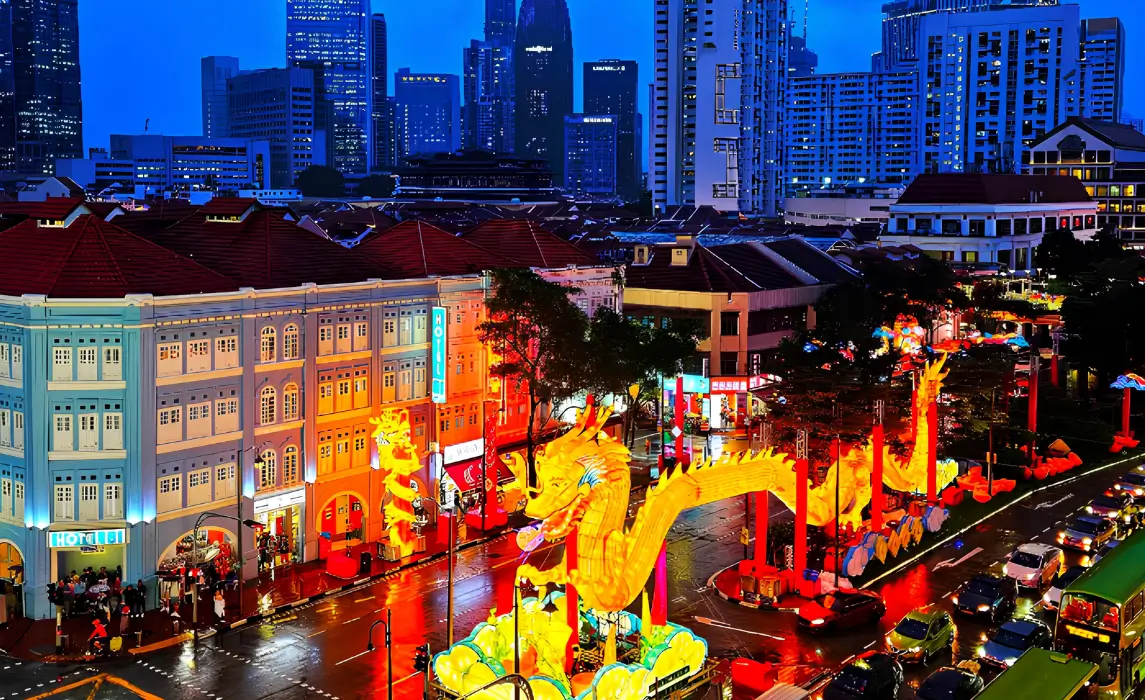
What it actually is: Not a single street but a whole historic district, a dense grid of shophouses, temples, markets, and food stalls that's been the cultural heart of Singapore's Chinese community for over a century. It's one of the few areas in the city where the architecture, the smells, and the street life all still feel genuinely old, even as it sits minutes from the ultra-modern CBD.
What makes it different from other Chinatowns: Most Chinatowns abroad are commercial districts that grew organically. Singapore's is the opposite, a heritage zone that's been deliberately conserved, so the shophouse facades, five-foot ways, and temple architecture are protected by law. That's why it still looks the way it did decades ago, even with modern shops tucked inside.
Don't skip:
When to go: Chinese New Year turns the whole district into a festival, with red lanterns, street décor, and free "red packets" (small token gifts) handed out as part of the celebrations, but it's also the most crowded time of year. For a calmer visit with the same atmosphere minus the crowds, weekday afternoons are noticeably quieter. Evenings are when the district feels most alive, with the lantern-lit streets making for some of the best casual photography in the city.
Practical tips: Most stalls and small shops accept GrabPay or GCash, but it's worth carrying some cash for the older stalls and wet market vendors who don't take digital payments. Wear comfortable shoes, the district covers more ground than it looks like on a map, and exploring it properly takes a few hours.
Discover the best Hawaii souvenirs and Hawaiian gifts to bring home, from local treats and crafts to unique keepsakes that capture the spirit of the islands.
Read MoreWhat it actually is: A cast-iron Victorian market hall from 1894, now a 24-hour hawker centre in the middle of the financial district, which is what makes it unusual. It's the only major hawker centre in Singapore housed in a heritage-listed colonial building, and the contrast between the ornate ironwork ceiling and the plastic stools underneath is part of its charm.
What sets it apart: At night, the road outside, known as Satay Street, closes to traffic and fills with open-air satay grills, something no other hawker centre in Singapore does at this scale. It's the reason Lau Pa Sat has a genuinely different atmosphere after dark compared to during the lunchtime office rush.
What to actually order: Curry chicken with French loaf or roti prata is one of the centre's signature combinations, the bread is there specifically to soak up the thick, spiced gravy. Satay from the street stalls outside, served with a rich peanut sauce, is the other dish most people come back for. Skip the bottled or blended fruit "juices" from casual drink stalls if you want something that actually tastes fresh, a few reviewers have noted these lean heavily on syrup rather than real fruit; a large jug of fresh sugar cane juice is the better bet for a crowd.
Good to know: Lau Pa Sat serves a genuinely international spread, Chinese, Indian, Malay, and Peranakan stalls all operate side by side, and there's a solid range of halal options, though the seasoning style leans distinctly Singaporean rather than matching South Asian home cooking, so if you're looking for familiar Pakistani or North Indian flavours specifically, it may not hit the mark.
Practical tips: Evenings, especially Fridays, get loud and packed, expect to share a table. Drink stalls are limited relative to food stalls, so lines for beverages can be longer than lines for food. Parking nearby is tight; the centre is a short walk from Raffles Place MRT, which is the easier option.
What it actually is: Singapore's biggest dedicated street-shopping market, a covered maze of narrow lanes packed with budget fashion, accessories, and souvenirs. It has a genuinely different feel from a shopping mall, closer to a night market energy, even during the day, because of how tightly packed and fast-moving the stalls are.
What sets it apart: Unlike most souvenir markets that specialise in one category, Bugis Street covers an unusually wide range in one place, clothing from $3–300, fresh fruit, phone accessories, watches, and snacks all within the same covered complex, which makes it one of the few spots in Singapore where you can genuinely combine a full shopping trip with a meal without leaving the building.
Who it's best for: It skews heavily toward women's and youth fashion, with a smaller selection for men. If you're shopping for teenage or young adult family members back home, this is one of the more efficient stops in the city for it.
Good to know: Bargaining is culturally accepted here in a way it isn't at malls, vendors generally expect a bit of back-and-forth on price, especially for souvenirs and accessories bought in multiples. If the crowds or heat get to be too much, Bugis Junction next door is an air-conditioned mall with the same MRT access, making it an easy way to split a shopping day into two different environments.
Practical tips: Late morning (after 10am) or early evening tends to be less crowded than peak afternoon or weekend hours. It's directly accessible from Bugis MRT station, and the road itself connects 24 hours to Bugis Junction, so it's walkable even outside typical shopping hours.
What it actually is: One of Singapore's oldest wet markets, recently renovated, split between a ground-floor produce and halal ingredients market and a second-floor hawker centre. It's the go-to destination in Singapore for Malay and halal Muslim cuisine specifically, in a way that's more concentrated here than almost anywhere else in the city.
What sets it apart: This is one of the least "touristy" major food centres on this list, it draws a strong local crowd rather than visitors, which means the food and pricing reflect what Singaporeans actually pay, not a tourist-adjusted rate. If you want to see how a working wet market functions day-to-day, alongside genuinely excellent halal food, this is a more authentic stop than the more visited hawker centres.
What to order: Nasi lemak, curry puffs, and Malay-style fried dishes are the highlights, alongside standout options like kambing (mutton) soup and mee rebus on the second floor. The rich, spiced coconut-based dishes here are a good entry point if you're new to Malay cuisine and want something with real depth of flavour.
Good to know: Seafood here tends to run cheaper than at mainstream supermarkets, but note that most fishmongers won't clean or fillet the fish for you on the spot, so it's better suited to visitors who are cooking rather than looking for a ready meal. If you're vegetarian or have dietary restrictions, ask before ordering, as clear labelling is less consistent here than at more tourist-oriented food centres.
Practical tips: Weekday mornings are noticeably quieter than weekends. Taxi queues here can run long, so it's worth planning transport via MRT (Paya Lebar) or ride-hailing apps rather than hailing a cab on the street.

Discover the best Bangladesh souvenirs to buy, from traditional crafts and textiles to local treats, plus where to find unique gifts and keepsakes.
Read MoreWhat it actually is: An open-air hawker centre that's been part of Singapore's food scene for decades, made internationally recognisable after appearing in Crazy Rich Asians. It's open 24 hours, which alone sets it apart from most hawker centres that wind down by mid-evening.
What sets it apart: Newton is one of the few hawker centres with multiple Michelin Bib Gourmand-recognised stalls in one location, giving it a genuine claim to some of the most consistently well-regarded street food in the city, though it comes at a price point noticeably higher than neighbourhood hawker centres, largely due to its central, tourist-heavy location.
What to order: The trio most people come back for is fried Hokkien mee, satay, and BBQ chicken wings, the Hokkien mee in particular stands out for its smoky prawn-based broth and the crispy pork lard folded through it. A squeeze of calamansi cuts the richness nicely. Sambal stingray and seafood Hokkien mee are also strong picks if you want something more substantial. Pair any of it with a large iced sugar cane juice, which does double duty as a palate cleanser between grilled dishes.
Worth knowing before you go: Newton carries a reputation as pricier and more tourist-facing than centres like Chinatown Complex or Maxwell, a meal here can run 30–40% above what the same dish costs elsewhere, and portion or pricing disputes have been reported at a handful of individual stalls, so it's worth confirming prices before ordering, particularly for seafood and satay sold by piece rather than by set.
Practical tips: It's a short walk from Newton MRT, with a large adjoining car park that still fills up during dinner. Most stalls close for lunch and only open in the afternoon through late night, so this is better planned as a dinner or late-supper stop than a lunch destination.
No, while Chinese cuisine dominates, the district also has Vietnamese coffee spots and sits close to Maxwell Food Centre, which offers a broad mix of Singaporean hawker dishes beyond Chinese food alone.
Lau Pa Sat is generally the more affordable of the two for a standard hawker meal, while Newton tends to run 30–40% higher due to its central location and Michelin-recognised stalls.
Cash is still useful at Geylang Serai's wet market and some older Chinatown stalls, but most food centres and Bugis Street vendors now accept GrabPay, GCash, or card payments.
It's more heavily stocked for women's and youth fashion. Men will find some options, but the selection is noticeably smaller compared to the women's clothing on offer.
No, it's one of the more locally-frequented food and market destinations on this list, which is part of its appeal for visitors wanting a more authentic experience.
Evening through late night, since it's open 24 hours and most stalls don't open until the afternoon. It's especially lively after dark.