Read Related Article: Best Norwegian Souvenirs
Discover the best Norwegian souvenirs to bring home, from traditional crafts and local delicacies to unique gifts that capture Norway’s culture and charm.
Read More
.webp)
Hawaii, a tropical paradise located in the Central Pacific, is renowned for its breathtaking natural beauty, including pristine beaches, lush rainforests, and dramatic volcanic landscapes. Comprising a chain of islands, each with its own distinct character, Hawaii offers a diverse range of experiences for visitors. The island of Oahu is home to the vibrant city of Honolulu and the historic Pearl Harbor, while Maui boasts stunning beaches and the scenic Hana Highway. The Big Island, known as Hawaii Island, features active volcanoes in Hawaii Volcanoes National Park and majestic waterfalls along the Hamakua Coast. Kauai, often called the "Garden Isle," enchants visitors with its verdant valleys and towering sea cliffs. With its unique blend of Polynesian culture, warm hospitality, and natural wonders, Hawaii offers an unforgettable escape for travelers seeking paradise.
.webp)
.webp)
.webp)
%2520(1).webp)
.webp)
.webp)
.webp)
.webp)
.webp)
.webp)
Nevada, located in the western United States, is renowned for its diverse landscapes, vibrant entertainment, and rich history. The state is most famous for Las Vegas, a global entertainment capital known for its bustling casinos, world-class shows, and vibrant nightlife. Beyond the glitz of Las Vegas, Nevada offers stunning natural beauty, including the rugged terrain of the Mojave Desert, the alpine scenery of Lake Tahoe, and the striking rock formations of Red Rock Canyon and Valley of Fire State Park. The state capital, Carson City, along with historic towns like Virginia City, reflect Nevada's storied past rooted in the mining boom of the 19th century. With its blend of high-energy urban centers, expansive deserts, and scenic mountains, Nevada provides a unique and captivating experience for residents and visitors alike.
.webp)
.webp)
.webp)
.webp)
.webp)
.webp)
.webp)
.webp)
.webp)
.webp)
Florida, situated in the southeastern United States, is renowned for its sunny weather, sandy beaches, and vibrant culture. The state is home to world-famous tourist destinations like Walt Disney World Resort in Orlando, the Everglades National Park, and the vibrant art deco architecture of Miami Beach. With its diverse population, Florida boasts a rich cultural tapestry influenced by Latin American, Caribbean, and Southern traditions. Its economy is driven by industries such as tourism, agriculture, aerospace, and technology. Florida's natural beauty, outdoor recreational opportunities, and lively entertainment scene make it a popular destination for residents and visitors seeking fun in the sun.
.webp)
.webp)
.webp)
.webp)
.webp)
.webp)
.webp)
.webp)
.webp)
.webp)
Quick answer: The best market in Kuala Lumpur depends on the occasion. Jalan Alor is best for first-timers and seafood (open nightly, RM40-100 or US$10-24 per person). Taman Connaught (Wednesdays) is best for variety and viral food. OUG (Thursdays) is best for hawker classics. Chow Kit is best for fresh produce and durian. Petaling Street is best for souvenirs and bargaining.
Kuala Lumpur has a market for nearly every mood, and picking the wrong one for the occasion is the most common way to have a mediocre night. This guide covers what each market is good for, what a realistic budget looks like, and the practical details most reviews skip.
Prices are in Malaysian ringgit (RM), converted at roughly RM4.2 to US$1. “Reported” figures come from visitor reviews. “Estimate” figures are ballpark ranges. Confirm both against the live exchange rate and on arrival.
Quick facts: Open nightly | Behind Bukit Bintang, near Pavilion KL | Estimated RM40-100 (US$10-24) for a seafood dinner
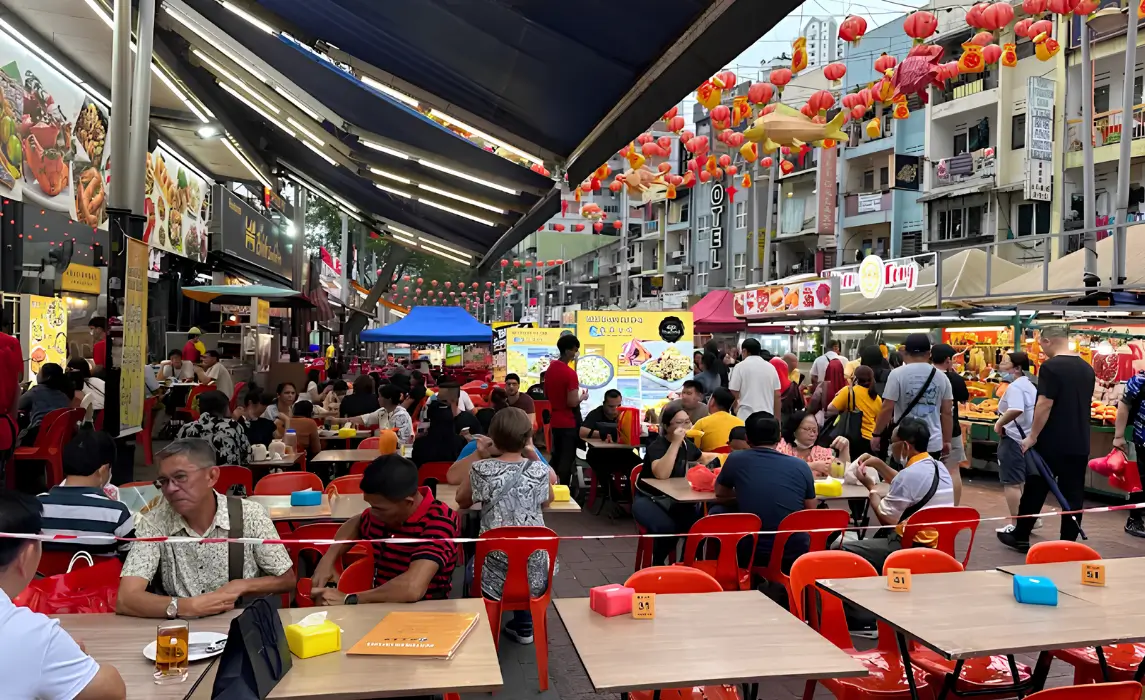
Jalan Alor is Kuala Lumpur’s best-known food street, and the most tourist-oriented market in this guide. It is a single, easy-to-navigate street of open-air restaurants, plastic stools, red lanterns, and charcoal smoke. It is worth visiting as a lively introduction to Malaysian food, but not as a bargain meal. Several visitors, especially families, report paying more here than at sit-down restaurants elsewhere in the city.
Seafood is the main event, along with satay, grilled chicken wings, and coconut ice cream. Musang King durian is also sold here: sweet, bitter, and very creamy. One reviewer reported a “durian headache” after eating too much, so share a portion first.
Estimated prices: satay at RM1.50-3 per stick (US$0.35-0.70), grilled seafood at RM40-100 per person (US$10-24), and drinks or desserts at RM6-15 (US$1.50-3.50). Seafood is usually sold by weight, so confirm the price before the order goes to the grill.
What makes it different: Jalan Alor is the only market here open every night and the only one built around a sit-down seafood dinner. It sits in KL’s busiest shopping district, so it fits easily into an evening after a day around Bukit Bintang.
Tips: Bring cash, though some stalls take digital payments. Fridays and Saturdays are the loudest and most crowded. Families with young children should arrive early.
-p-800.webp)
Discover the best Norwegian souvenirs to bring home, from traditional crafts and local delicacies to unique gifts that capture Norway’s culture and charm.
Read MoreQuick facts: Mainly a morning market, many stalls open late | Chow Kit, north of the city center | Estimated RM10-30 (US$2.40-7)
Chow Kit is mainly a morning wet market, not a Jalan Alor-style night market. Visitors who expect a food street are often disappointed, and that mismatch explains most of its negative reviews. Residents come here for fruit, vegetables, seafood, and halal meat at prices reviewers say are well below supermarkets.
Two things are worth seeking out. Cendul durian is shaved ice with coconut milk, palm sugar, and durian (estimate: RM8-15, or US$1.90-3.60). Apam balik is a folded pancake cooked on brass pans and filled with peanuts and caramelized sugar (estimate: RM3-6, or US$0.70-1.40). Roadside stalls also serve Minang, Thai, and Indian dishes, so ask for less spicy versions if needed. Seasonal fruit prices vary by stall, so walk the whole market once before buying.
What makes it different: Chow Kit works as a real neighborhood market rather than a tourist attraction. On Saturday nights a second-hand clothing market appears, which none of the other markets here offer.
Tips: Go early, before traffic builds. Weekends are packed, parking is limited, and the seafood section has a strong smell. Closed shoes are wise on wet floors.
Quick facts: Wednesdays only, from about 5pm | Taman Connaught, Cheras | Estimated RM30-50 (US$7-12)
Taman Connaught is widely described as the longest night market in Malaysia, with stalls stretching roughly 2 km. It runs only on Wednesdays, so locals treat it as a weekly event. Chinese, Thai, and viral TikTok snacks dominate: fruit mochi, salt-baked chicken and crab, Thai mini pancakes, and coconut jelly.
Reviewers recommend crispy roast pork, pandan mochi, assam laksa, braised meats, and crispy popiah at around RM4 a roll (US$0.95, reported). Many vendors sell similar items, so sample a few stalls rather than committing early. Estimated prices: snacks at RM3-10 (US$0.70-2.40) and mains or roast meats at RM10-25 (US$2.40-6).
What makes it different: Massive scale combined with once-a-week timing turns dinner into a neighborhood gathering. It is also one of the best places in KL to spot food trends early.
Getting there: Take the MRT to Taman Connaught station, use Exit A, and catch the T410 feeder bus to the pedestrian bridge in the middle of the market. Walking is possible but easy to get wrong.
Tips: Arrive between 5pm and 6pm. The crowd builds after 7pm and is shoulder-to-shoulder by 9pm. Vegetarian options are limited. Rain thins the crowds but makes the paths messier.
Quick facts: Thursdays, late afternoon to about 10:30pm | Jalan Hujan Emas, Overseas Union Garden | Estimated RM20-40 (US$5-9.50)
OUG is KL’s hawker-food favorite among the weekly night markets. Reviewers describe over 250 stalls and decades of history, with a mostly local, Chinese-Malaysian crowd. It is smaller and less crowded than Taman Connaught, though many of the same vendors work both.
The best-reviewed items are Penang-style char kuey teow, asam laksa, fried popiah, Thai-style moo ping pork skewers, stinky tofu, and siew yuk roast pork. The salted egg chicken and chicken wing stalls have loyal followings.
Reported prices: chicken wings 3 for RM5 (about US$1.20), fried fish balls and tofu RM3.20 for 6 pieces (US$0.75), seedless grapes about RM8 a box (US$1.90), bananas RM5/kg (US$1.20), and some household goods 3 for RM10 (US$2.40).
What makes it different: OUG mixes dinner stalls, fresh fruit, household goods, and a separate food truck section known for laksa and char kuey teow, all in a residential neighborhood. The feel is old-school and unpolished.
Getting there: Parking is the main headache. Reviewers suggest parking near Steven Corner or in the OUG market area and walking in, or using a taxi or ride-hailing.
Tips: Bring cash and arrive around 6pm. Part of the market runs along roads not fully closed to traffic. Ask the price first for items sold by weight.
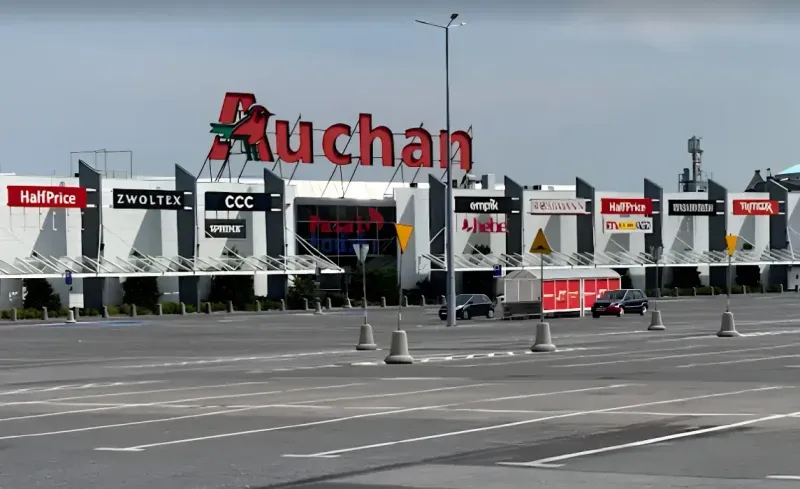
Explore grocery stores in Poland, from budget-friendly supermarkets to local shops. Discover popular chains, food prices, and tips for shopping like a local.
Read MoreQuick facts: Daily, liveliest after dark | Chinatown, near Pasar Seni MRT/LRT | Estimated RM20-50 (US$5-12)
Petaling Street is worth a visit for bargaining and atmosphere, not for authentic goods. It is KL’s best-known shopping street and a tourist market, selling souvenirs, clothing, bags, and many replica branded items. Pasar Seni MRT/LRT station is a few minutes’ walk away.
Bargaining is expected. Start at about 30-40% of the asking price and aim to settle around 50-60%. Walking away often prompts a better offer. Souvenir T-shirts and magnets typically cost RM10-25 (US$2.40-6, estimate).
The food is better than the shopping reviews suggest. Asam laksa and curry mee are reported at about RM9 (US$2.15), with Hokkien mee at night and dim sum in the morning. Choose stalls where food is prepared in view, and pick fresh coconut water over premade juices.
What makes it different: It is the only market here where haggling is part of the deal, and it sits in KL’s oldest Chinese district. Central Market, Kasturi Walk, and the mural-covered back alleys nearby deserve more time than the market itself.
Tips: Skip electronics, treat branded goods as replicas, keep valuables secure against pickpockets, carry cash, and avoid peak commuting hours at the station.
Schedules, stalls, and prices change, so confirm hours before heading out.
Jalan Alor is the best choice for first-timers. It opens every night, is easy to walk, sits near Bukit Bintang and Pavilion KL, and centers on sit-down seafood and classic street food. It is also the priciest market in this guide, at about RM40-100 (US$10-24) per person. Taman Connaught (Wednesday) and OUG (Thursday) offer better value.
Jalan Alor and Petaling Street run daily and get busiest after dark. Taman Connaught opens only on Wednesdays from about 5pm. OUG runs only on Thursdays, from late afternoon to about 10:30pm. Chow Kit is mainly a morning market, though some stalls stay open late. Confirm hours before going.
OUG and Chow Kit are the cheapest. A full dinner at OUG costs about RM20-40 (US$5-9.50), with reported prices like 3 chicken wings for RM5 (US$1.20). Chow Kit snacks such as apam balik cost an estimated RM3-6 (US$0.70-1.40). Jalan Alor is the most expensive option.
Cash is the safest option. Many stalls at Taman Connaught, OUG, Chow Kit, and Petaling Street are cash-based, and some Jalan Alor stalls accept digital payments. RM50-100 (US$12-24) per person covers most grazing sessions. Plan for RM100 (about US$24) or more for a Jalan Alor seafood dinner.
Take the MRT to Taman Connaught station and leave through Exit A. Then catch the T410 feeder bus, which stops at the pedestrian bridge in the middle of the market. Walking from the station is possible but easy to get wrong. Arrive by 5-6pm to avoid the heaviest crowds.