Read Related Article: Best Shopping Mall in Kuala Lumpur: Your KL, Malaysia Shop Guide
Discover the best shopping malls in Kuala Lumpur, Malaysia, from luxury brands and fashion hubs to food courts and entertainment spots.
Read More
.webp)
Hawaii, a tropical paradise located in the Central Pacific, is renowned for its breathtaking natural beauty, including pristine beaches, lush rainforests, and dramatic volcanic landscapes. Comprising a chain of islands, each with its own distinct character, Hawaii offers a diverse range of experiences for visitors. The island of Oahu is home to the vibrant city of Honolulu and the historic Pearl Harbor, while Maui boasts stunning beaches and the scenic Hana Highway. The Big Island, known as Hawaii Island, features active volcanoes in Hawaii Volcanoes National Park and majestic waterfalls along the Hamakua Coast. Kauai, often called the "Garden Isle," enchants visitors with its verdant valleys and towering sea cliffs. With its unique blend of Polynesian culture, warm hospitality, and natural wonders, Hawaii offers an unforgettable escape for travelers seeking paradise.
.webp)
.webp)
.webp)
%2520(1).webp)
.webp)
.webp)
.webp)
.webp)
.webp)
.webp)
Nevada, located in the western United States, is renowned for its diverse landscapes, vibrant entertainment, and rich history. The state is most famous for Las Vegas, a global entertainment capital known for its bustling casinos, world-class shows, and vibrant nightlife. Beyond the glitz of Las Vegas, Nevada offers stunning natural beauty, including the rugged terrain of the Mojave Desert, the alpine scenery of Lake Tahoe, and the striking rock formations of Red Rock Canyon and Valley of Fire State Park. The state capital, Carson City, along with historic towns like Virginia City, reflect Nevada's storied past rooted in the mining boom of the 19th century. With its blend of high-energy urban centers, expansive deserts, and scenic mountains, Nevada provides a unique and captivating experience for residents and visitors alike.
.webp)
.webp)
.webp)
.webp)
.webp)
.webp)
.webp)
.webp)
.webp)
.webp)
Florida, situated in the southeastern United States, is renowned for its sunny weather, sandy beaches, and vibrant culture. The state is home to world-famous tourist destinations like Walt Disney World Resort in Orlando, the Everglades National Park, and the vibrant art deco architecture of Miami Beach. With its diverse population, Florida boasts a rich cultural tapestry influenced by Latin American, Caribbean, and Southern traditions. Its economy is driven by industries such as tourism, agriculture, aerospace, and technology. Florida's natural beauty, outdoor recreational opportunities, and lively entertainment scene make it a popular destination for residents and visitors seeking fun in the sun.
.webp)
.webp)
.webp)
.webp)
.webp)
.webp)
.webp)
.webp)
.webp)
.webp)
Malaysia doesn't do generic souvenirs well, and that's a good thing. The country's craft tradition runs deep, shaped by Malay, Chinese, Indian, and Bornean cultures layered on top of each other over centuries. What ends up on the shelves reflects that: hand-beaten pewter, hand-woven gold-threaded silk, sticky palm sugar candy, and indigenous beadwork from the jungles of Borneo.
This guide covers the nine most distinctive things worth buying in Malaysia, followed by an honest breakdown of the three best places to actually shop for them, including what makes each one different, what you'll pay (in MYR and USD), and what most travel blogs leave out.
Pewter is Malaysia's most globally recognized craft, and Royal Selangor is the name behind it. Founded in Kuala Lumpur in 1885 by a Hakka Chinese immigrant named Yong Koon, the brand has been producing hand-finished pewter goods for over 140 years from the same city. Tankards, picture frames, keepsake boxes, jewellery, and corporate gifts, each piece carries a quality mark and ages beautifully.
What makes this worth buying over a mass-produced souvenir: pewter is 97% tin, making it naturally tarnish-resistant and food-safe. A well-made piece lasts generations. Small items like a engraved coaster or business card holder start around RM 50 (USD 10); elaborate decorative pieces can run into the hundreds.
Practical note: The Royal Selangor Visitor Centre in Setapak, KL offers factory tours where you can watch craftsmen at work, and even engrave your own piece for an extra fee.
Malaysian batik is not the same as Javanese batik. Where Javanese batik uses fine lines and earthy tones, Malaysian batik tends toward bold, large-scale florals in bright, saturated colours, produced either by hand-drawing with a canting tool (batik tulis) or block-printing. The Kelantan and Terengganu coasts produce the most distinctive regional styles.
You can buy batik as raw fabric sold by the metre, or as finished pieces, sarongs, scarves, shirts, dresses, and even home décor. A metre of good batik fabric runs RM 20–60 (USD 4–13). Ready-to-wear pieces from reputable artisan shops start around RM 80–150 (USD 17–33).
What to watch for: Mass-produced batik-print items are everywhere. True hand-drawn batik tulis will have slight line variations and a wax-resist texture on the reverse side. If it's perfectly uniform on both sides, it's a machine print.
Discover the best shopping malls in Kuala Lumpur, Malaysia, from luxury brands and fashion hubs to food courts and entertainment spots.
Read MoreSongket is arguably Malaysia's most prestigious textile. It's hand-woven on a traditional loom using real metallic threads, gold or silver, inlaid over silk or cotton to create complex geometric patterns. It's worn at weddings, royal ceremonies, and formal occasions across the Malay world.
Buying songket is buying a piece of living heritage. A single shawl might represent 40–80 hours of a weaver's labour. The finest pieces come from Kota Bharu in Kelantan and Kuala Terengganu, where weaving cooperatives still operate traditionally. In KL, you'll find it at artisan-certified shops in shawl, clutch, and fabric form.
Budget reality: Authentic songket is not cheap. Expect to pay RM 200–400 (USD 43–87) for a decent shawl. Anything significantly cheaper is likely a machine-woven imitation.
Dodol is one of those foods that's difficult to describe but impossible to forget. It's made from coconut milk, palm sugar (gula melaka), and glutinous rice flour, cooked in a heavy wok for hours until it thickens into a dense, deeply caramelised block. The texture is somewhere between soft toffee and mochi. Durian dodol is the most beloved variety; pandan dodol is the most fragrant.
It travels well, comes individually wrapped, and is inexpensive enough to bring back for everyone at the office. Market stalls in Malacca and Kelantan make the best versions. Supermarket dodol is decent but noticeably milder.
Ipoh, a city in Perak state, has an outsized reputation for coffee. White coffee gets its name not from the colour but from the roasting method, beans are roasted with palm oil margarine instead of sugar or wheat, resulting in a lighter, less bitter cup with a creamy, slightly nutty finish.
The Old Town White Coffee and Aik Cheong brands are the most widely available in packaged 3-in-1 sachet form. A box of 15 sachets costs around RM 12–18 (USD 2.60–3.90) and is a genuinely excellent gift for coffee drinkers back home. If you want the real experience, drink it fresh at a kopitiam (traditional coffee shop) in Ipoh or the Klang Valley.
Kaya is a coconut milk and egg jam flavoured with pandan leaf. It's the defining condiment of the Malaysian breakfast table, spread thickly on grilled white bread with salted butter. The result is rich, fragrant, and slightly sweet in a way that's hard to explain and very easy to eat too much of.
Jarred kaya is available in every supermarket. The green variety is pandan-flavoured; the brown variety is made with coconut sugar and has a deeper, more caramel-like flavour. Both are good. Small artisan brands at Central Market often make fresher batches without preservatives, check the label if shelf life matters for travel.
Customs note: Kaya in a sealed, commercially packaged jar is generally accepted into most countries. Homemade or fresh kaya may cause issues. Check your home country's import rules before buying.

Discover the best anime stores in Tokyo, Japan, from Akihabara shops to hidden gems selling figures, manga, merch, and collectibles.
Read MoreTongkat Ali (Eurycoma longifolia) is a root native to the Malaysian rainforest, traditionally used as an energy and vitality tonic for centuries. It's considered one of Malaysia's three national treasures alongside pewter and bird's nest, and unlike many herbal supplements with dubious claims, tongkat ali has a reasonable body of scientific literature behind it.
It's sold in capsules, coffee blends, tinctures, and energy sachets. The quality varies enormously. Look for products with a Malaysian Ministry of Health (MOH) registration number on the label, or stick to pharmacy brands like Kordel's or Akar Kayu. Avoid unlabelled sachets at market stalls.
Congkak is a two-player mancala-style game played on a carved wooden board with seeds or small stones. It's been played across the Malay Archipelago for centuries and remains genuinely loved, not just sold as décor. A well-made hand-carved board is beautiful enough to display and still functional to play.
Gasing are traditional spinning tops used in competitive spinning events in rural Kelantan and Terengganu, where tops can spin for over an hour. The decorative versions sold in souvenir shops are typically smaller, hand-painted in bold primary colours, and make striking gifts.
Best buy: A larger congkak set with carved detailing (RM 45–90 / USD 10–20) is the better value over a small basic version. Look for ones with a hollowed storage compartment for the seeds.
Sabah and Sarawak, Malaysian Borneo, produce a completely different craft tradition from Peninsular Malaysia. The indigenous Iban, Kadazan-Dusun, and Penan peoples make intricately beaded necklaces, bracelets, and accessories; woven baskets and rattan bags; and hand-carved wooden figures with distinct tribal motifs.
These are genuinely hard to find in Peninsular Malaysia. If you're visiting Kota Kinabalu or Kuching, buy directly from artisan markets, Gaya Street Sunday Market in KK and the Main Bazaar in Kuching are the best. If you're staying in KL, Karyaneka occasionally stocks Bornean crafts, but the selection is limited.
Best for: Batik, pewterware, handmade crafts, songket, art, traditional games
Price range: Budget to mid-range, with room to bargain
Opening hours: Daily, approximately 10am–10pm
Getting there: Pasar Seni LRT/MRT station, exit directly onto the building
Central Market is the most culturally coherent shopping destination in KL. The building itself, a pale blue Art Deco structure dating to 1888, was originally a wet market before being converted into a cultural retail hub in 1986. The renovation was done thoughtfully: the heritage architecture is intact, it's fully air-conditioned, and the stalls are organised into distinct cultural zones, Malay Street, Straits Chinese, and Little India, each showcasing a different strand of Malaysian craft.
What sets Central Market apart from other souvenir destinations is the quality-to-authenticity ratio. You'll find hand-painted batik, hand-carved wooden goods, genuine pewterware, and locally made jewellery sitting alongside cheaper tourist trinkets, the key is knowing what you're looking at. Most vendors will happily explain their products, and many are artisans themselves.
What most visitors miss: The Annexe building next door runs batik painting workshops where you can create your own piece on fabric or canvas. It costs around RM 50–80 (USD 11–17) for a session and you take your work home. The Kasturi Walk outdoor corridor running alongside the building is lined with additional stalls and food kiosks, don't skip it.
The honest trade-off: Prices at Central Market are slightly higher than Petaling Street. Some stalls do stock mass-produced items alongside authentic crafts, check the underside of items for "Made in China" labels if authenticity matters. For packaged food products like kaya or white coffee, the grocery store inside the building tends to be cheaper than the individual market stalls.
Carry cash. Many stalls don't accept cards, or will add a surcharge. An ATM is inside the building.
Discover the best places to buy jewelry in Guam, from luxury boutiques to local shops offering pearls, gold, and island-inspired designs.
Read MoreBest for: Packaged snacks, coffee, kaya, dodol, budget souvenirs, atmosphere
Price range: Very budget-friendly if you bargain
Opening hours: Stalls typically open from mid-morning; busiest and best from 7–10pm
Getting there: Pasar Seni LRT/MRT, 5-minute walk
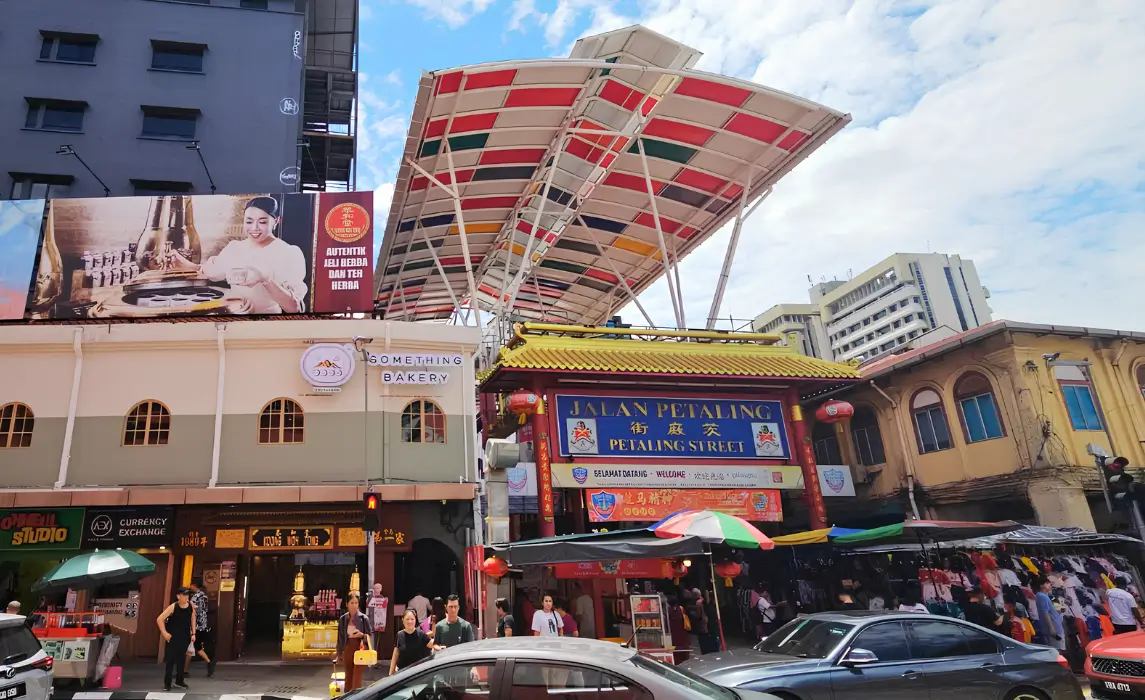
Petaling Street is one of those places that earns its reputation through sheer sensory overload. Hanging red lanterns overhead, vendors calling out from every doorway, the smell of char kway teow and durian mixing in the warm evening air. It's chaotic, yes, but the chaos has a rhythm, and once you find it, it's genuinely enjoyable.
For buying things to eat and bring home, Petaling Street is hard to beat on price. You'll find all the major packaged snacks, Old Town and Aik Cheong white coffee, Gardenia kaya, dodol, Beryl's chocolate, Mamee snacks, and Tongkat Ali products, at lower prices than supermarkets or airport shops. The same fridge magnets and keychains that cost RM 15 in the airport cost RM 5 here.
What sets it apart from Central Market: Petaling Street is a functioning neighbourhood market, not a heritage retail space. The energy is more raw, the bargaining is more aggressive, and the crowd is more mixed, locals doing their weekly shopping, tourists hunting for deals, food vendors doing serious business. It feels like the real city in a way that a curated craft market doesn't.
Bargaining is not optional here, it's expected. Opening prices for tourists are routinely 2–3x what locals pay. A polite counter-offer at 50–60% of the asking price is a reasonable starting point. Walk away slowly if they don't come down; they usually will. Avoid being aggressive or dismissive, vendors who enjoy the exchange will give you better prices than those who feel cornered.
The best time to visit is evening, from around 7pm onwards. The lights come on, the food stalls fire up, and vendors are in a better mood to deal, especially in the last hour before closing. Mornings are quieter but less atmospheric and sellers are less flexible on price.
Watch your belongings. It's crowded, especially on weekends, and pickpocketing does happen. Keep bags in front, don't flash phones unnecessarily, and carry only the cash you plan to spend.
Best for: Certified authentic Malaysian handicrafts, songket, premium batik, rattan bags, silverware
Price range: Mid-range to premium; fixed prices, no bargaining
Opening hours: Daily 9am–6pm (approximate; confirm before visiting)
Getting there: Jalan Conlay, Bukit Bintang area; about 10–15 minutes by Grab from Central Market
Karyaneka is the government-backed artisan marketplace housed within the Kompleks Kraf Kuala Lumpur complex in the Bukit Bintang area, and it's the one shopping destination in this guide where authenticity is structurally guaranteed. Products are certified by the Malaysian Handicraft Development Corporation (Kraftangan Malaysia), which means everything sold here is genuinely made by Malaysian artisans, not imported and rebranded.
The complex is actually three adjacent shops: the leftmost focuses on craft and artisan goods (rattan, wood, ceramics, beadwork), the middle shop specialises in traditional textiles and songket fabric, and the third is dedicated to batik clothing and wearables. Behind the building, near the car park, there's a smaller cluster of cheaper stalls, worth checking if you're on a budget.
What makes Karyaneka uniquely valuable is the range within a single category. The batik selection alone spans plant-dyed artisan pieces (RM 150–400 / USD 32–87), hand-drawn batik tulis shirts (RM 100–250 / USD 22–54), and more affordable printed batik options. Staff are trained to explain the differences, the one at the batik clothing store will walk you through what makes each piece, its care requirements, and which weaving region it comes from. That level of context doesn't exist at street markets.
The Bemban rattan bags here deserve a special mention. Made from woven swamp grass, they're durable, weather-resistant, and genuinely beautiful. Longtime customers report using the same bag for 15+ years. Prices range from RM 60–180 (USD 13–39) depending on size and complexity of weave.
The trade-off: Karyaneka is quieter, sometimes very quiet, and the atmosphere lacks the energy of street markets. Some visitors find the selection a bit sparse compared to what it was years ago. But if your priority is buying something you're confident is genuine Malaysian craft, at a fair fixed price, without needing to assess authenticity yourself, this is where to come.
If you have an hour to spare: The Textile Art Museum on the same grounds is free or low-cost to enter and provides excellent context for understanding the batik and songket you'll see for sale. Seeing the historical pieces before you shop changes how you evaluate what you're buying.
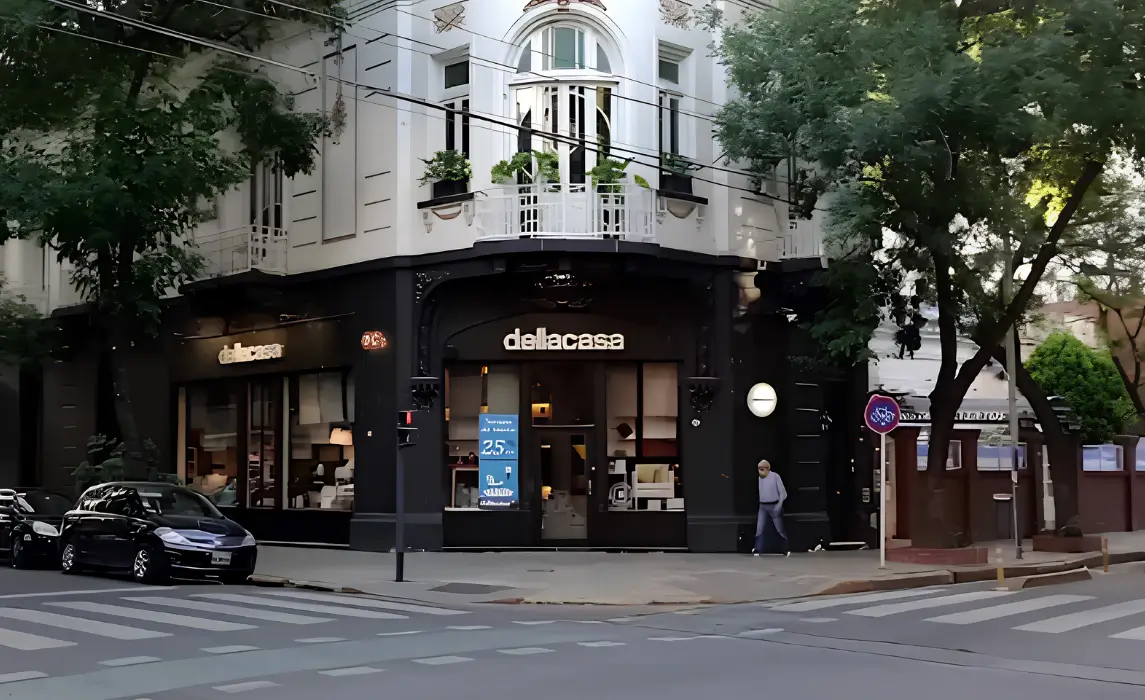
Discover the best 5 furniture stores in Buenos Aires, from modern designs and luxury pieces to local artisan shops and budget-friendly finds.
Read MoreAt street markets like Petaling Street, yes, bargaining is part of the culture and prices are typically inflated for tourists. At certified craft centres like Karyaneka, prices are fixed. At Central Market, it depends on the stall; some are fixed-price artisan shops, others are open to negotiation. A good rule of thumb: if there's no price tag displayed, it's negotiable.
Ipoh white coffee sachets, kaya jam (commercially sealed), and dodol are the strongest answers, all flavourful, distinctly Malaysian, inexpensive, and easy to pack. For a more lasting non-food option, a piece of hand-printed batik fabric (rolled, not folded) travels well and can be framed or used as a scarf.
Many are not. A significant portion of items sold at Petaling Street, particularly keychains, figurines, and mass-market souvenirs, are manufactured in China and sold as Malaysian souvenirs. For genuinely Malaysian-made handicrafts, Central Market and Karyaneka are more reliable. Petaling Street is better used for packaged food products, where the branding and origin are clearly labelled.