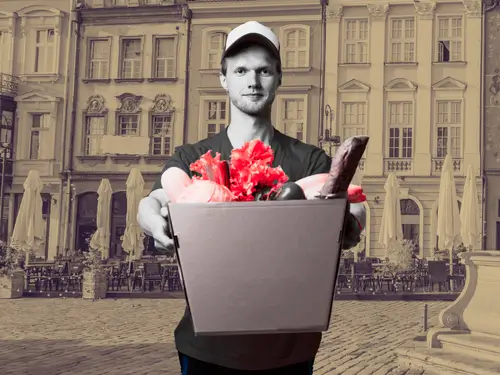
Croatia's shopping scene runs on local character rather than big retail, open-air markets that have operated since the 1930s, artisan alleys tucked behind medieval walls, and regional specialties that change depending on whether you're in the capital, the coast, or the islands. Here's where to shop, what to bring home, and a few quick answers before you go.
Shopping Locations
1. Dolac Market, Zagreb
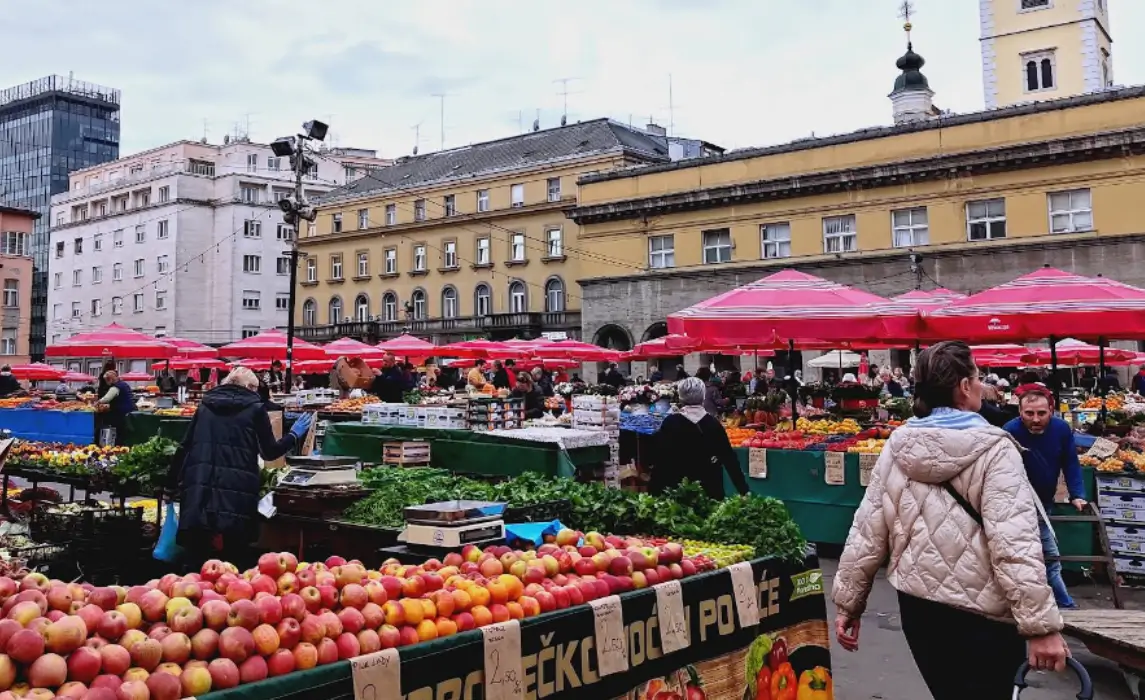
Dolac has been Zagreb's main trading square since 1930, and it's still where locals, not just tourists, do their daily shopping for produce, cheese, flowers, and honey. It runs on a two-tier layout: an open-air upper square shaded by the market's signature red umbrellas (a nod to the folk costumes of nearby Šestine village), and a covered lower hall for meat, dairy, and fish.
A few things worth knowing before you go that most guides skip: prices climb the closer a stall is to the entrance, so it pays to walk further in, one shopper found cherries priced at €8 (about USD 8.60) right at the entrance versus €3 (about USD 3.25) just a short walk further into the market. Bargaining isn't really the custom here, but tasting before you buy is expected and welcomed. If you're shopping late in the day, around 1:30 PM vendors often discount surplus produce down to roughly €1 (about USD 1.10) per item to avoid carrying it home. One etiquette note: some flower vendors don't want their bouquets photographed, so it's worth asking before you snap a picture. The market runs daily from about 6:30 AM to 2–3 PM (earlier close on Sundays), and it's cash-only.
2. Stradun, Dubrovnik's Old Town
Stradun is the 300-meter limestone promenade running through Dubrovnik's walled Old Town, from Pile Gate to Ploče Gate, rebuilt with its uniform baroque façades after a devastating 1667 earthquake. It's genuinely beautiful, polished smooth by centuries of foot traffic until it gleams underfoot, but it's worth treating as a place to browse and take in the atmosphere rather than where you'll find your best souvenir deals.
Shops directly on Stradun tend to be priced for the roughly two million tourists who pass through every year, and the selection leans toward generic souvenirs, sunglasses, t-shirts, and beachwear you'll often find cheaper at shopping centers outside the Old Town. For anything you actually want to invest in, like filigree jewelry or local artwork, duck into the side alleys (Od Puča is a good starting point) where the small workshops are. Timing matters here more than almost anywhere else in Croatia: Stradun is shoulder-to-shoulder during midday cruise-ship hours, but walking it at sunrise or after dinner, once the crowds thin, is a completely different, and free, experience.
3. Green Market, Split
Split's Green Market sits right at the edge of the Old Town near the harbor, mixing a genuine local produce market with a solid stretch of souvenir, jewelry, and clothing stalls. It's an easy add-on if you're already walking to or from Diocletian's Palace or the bus station.
The market has a reputation locals will back up: souvenirs and clothing here are often noticeably cheaper than equivalent items sold in Old Town shops, one shopper found shorts priced at €14 (about USD 15) at the market versus €40 (about USD 43) for the same style in town. That said, pricing consistency varies stall to stall. Items with a clearly marked price, like a €3 (about USD 3.25) ring, are safe bets, but unmarked jewelry has been known to get quoted at €20 (about USD 22) or more to visitors who don't ask upfront. If coral or turquoise jewelry catches your eye, treat the claim with a healthy dose of skepticism, pieces sold from the market's underground stalls aren't always what they're advertised as. The market runs roughly 7 AM to 3 PM daily, and most vendors are cash-only.
Read Related Article: Where to Buy Quality Shoes in Algiers: An Honest Guide to 5 Popular Stores
Discover where to buy quality shoes in Algiers with this honest guide to 5 popular stores offering sneakers, formal shoes, boots, and everyday footwear.
Read More
4. Ilica Street, Zagreb
Ilica is Zagreb's longest and oldest commercial street, running east to west from Ban Jelačić Square through the heart of the lower town. Unlike Dolac's food-market energy or Stradun's tourist-souvenir density, Ilica's draw is its boutiques, small shops carrying Croatian designer goods, handcrafted leather, and shoes from local family-run manufacturers who sometimes still take custom orders.
The honest tip here is about pacing yourself: the stretch nearest Ban Jelačić Square is genuinely lively, with the best mix of shops, cafés, and evening foot traffic, while the street thins out into quieter residential blocks the further west you walk. Treat it as a corridor to dip in and out of rather than a start-to-finish walk. It's also worth checking whether a seasonal event like the Ilica antiques and craft fair happens to be running during your visit, it draws out vendors selling handmade and vintage goods you won't see on a normal day.
5. Rovinj Old Town, Istria
Rovinj is the slower, more boutique alternative to Croatia's bigger shopping hubs, a Venetian-built old town with narrow, winding alleys climbing uphill from the harbor to the Church of St. Euphemia. Along the way, small shops sell Istrian truffle products, olive oils, and Italian leather goods, tucked into buildings with the same weathered, sea-salt charm as the town itself.
The harbor-side market at the marina is the most touristy part, fine for a quick look at fruit, truffle oil, and souvenirs, but not the highlight. The real draw is wandering uphill and letting the alleys decide your route; that's where the boutiques and cafés with genuine character are. Rovinj is also notably quieter than Dubrovnik or Split, especially if you visit in the shoulder season (late September into October), which makes it a better fit if you'd rather browse without fighting crowds. Bring a light jacket even in early fall, the coastal wind picks up more than you'd expect.
Souvenirs Worth Buying
1. Šestine Umbrella
Named after Sestine, one of Zagreb's oldest neighborhoods, this umbrella's red canopy with multicolored horizontal stripes comes directly from local folk costume patterns dating back to at least the 18th century, the same design you'll spot shading the stalls at Dolac Market. The craft is now part of Croatia's register of protected cultural heritage. An original from a maker like Cerovečki runs around €130 (about USD 140), though smaller printed versions or a matching raincoat are cheaper, easier-to-pack alternatives if you don't need the full-size version.
2. Licitar Heart
These bright red, hand-decorated gingerbread hearts originated in the Zagreb region as a folk-art tradition and are traditionally given as tokens of love, meant to be kept as an ornament or keepsake, not eaten. You'll find them in gift shops well beyond Zagreb, including down the coast in Dubrovnik. They're cheap, at roughly €3–10 (about USD 3–11) depending on size and decoration, and light enough to not think twice about packing.
3. Croatian Lace
Lacemaking earned UNESCO Intangible Cultural Heritage status in 2009, with three towns carrying the tradition: Lepoglava for bobbin lace, Pag Island for lace made from agave threads, and Hvar for lace made from aloe fiber by Benedictine nuns. Each piece is genuinely labor-intensive, which shows in the price, smaller doilies or bookmarks start around €20–50 (about USD 22–54), while larger tablecloths or the most intricate pieces can run €200 to over €1,000 (roughly USD 215–1,080+). If lace catches your eye, it's worth asking which of the three traditions a specific piece follows, the technique and origin genuinely change the story behind it.
4. Croatian Wine
Wine here goes back to Greek and Roman-era vineyards, and a bottle makes for one of the more interesting conversation-starter souvenirs. Plavac Mali, a bold red grown on the Pelješac peninsula, is a genetic parent of Zinfandel, meaning the wine your American relatives know actually traces back here. A well-regarded bottle of Dingač (made from Plavac Mali) runs around €60 (about USD 65). For something lighter, Istrian Malvazija is a dry white starting around €20 (about USD 22) a bottle, and Croatia's Plešivica region specializes in sparkling wines if you'd rather bring back bubbles.
Read Related Article: Best Mongolian Souvenirs to Buy & Bring Back from Mongolia
Discover the best Mongolian souvenirs to buy, from cashmere and felt crafts to traditional boots, horsehead fiddles, and local foods to bring home.
Read More
5. Istrian Truffle Products
Istria's oak forests are genuine truffle country, and the region's white and black truffles show up in everything from olive oil and honey to cheese and pasta. Shops throughout Istrian towns like Rovinj sell truffle-infused products packaged for travel, typically €10–35 (about USD 11–38) depending on the product and truffle concentration. Pair it with a bottle of Istrian olive oil, the region holds several Protected Designation of Origin labels, for a food souvenir that's genuinely tied to where you traveled, rather than something available at any airport.
6. Filigree or Coral Jewelry
Dubrovnik's Placa and Od Puča streets are the place for both: filigree jewelry twists fine silver or gold wire into delicate, lace-like patterns using a technique passed down through generations, while red coral, harvested from the Adriatic, has a long history in Croatian jewelry-making. Expect to pay €30–150 (about USD 32–162) for filigree earrings or pendants, with coral pieces varying more widely by size and setting. If you're buying coral specifically, ask the seller directly where and how it was sourced, responsible harvesting matters for the health of Adriatic reefs, and reputable sellers should be able to answer without hesitation.
7. Hvar Lavender Products
Hvar's lavender fields are one of the island's defining features, and the local harvest goes into oils, soaps, sachets, and dried bundles sold at farms and markets across the island. It's an easy, lightweight souvenir, pack a sachet in a suitcase and it'll scent your clothes for the whole flight home. Expect €5–20 (about USD 5–22) depending on the product, and look for a strong, natural fragrance and vibrant color as signs the lavender wasn't diluted or cut with filler.
FAQs
1. Do markets like Dolac take credit cards?
Mostly no, vendors at Dolac, Split's Green Market, and similar stalls are usually cash-only, so carry euros before you go.
2. Is Croatian lace really worth the price?
For genuine Lepoglava, Pag, or Hvar lace, yes, each piece is UNESCO-recognized handwork that can take weeks to complete, which is reflected in the cost.
3. What's the easiest Croatian souvenir to pack?
A licitar heart, a lavender sachet, or a small bottle of Istrian olive oil, all lightweight, compact, and unlikely to break in transit.

.webp)
.webp)
.webp)
.webp)
%2520(1).webp)
.webp)
.webp)
.webp)
.webp)
.webp)
.webp)
.webp)
.webp)
.webp)
.webp)
.webp)
.webp)
.webp)
.webp)
.webp)
.webp)
.webp)
.webp)
.webp)
.webp)
.webp)
.webp)
.webp)
.webp)
.webp)
.webp)
.webp)