Hawaii has a way of staying with you long after the trip ends, the smell of plumeria, the sound of slack-key guitar, the taste of fresh pineapple. The right souvenir bottles a little of that feeling and brings it home. Whether you're shopping on Oahu, Maui, Kauai, or the Big Island, here's what's actually worth buying, what to skip, and where to find the real thing instead of a mass-produced knockoff.
1. Kona Coffee
Grown almost exclusively on the slopes of Mauna Loa and Hualalai on the Big Island, Kona coffee is one of the few truly place-specific products Hawaii offers. Look for bags labeled "100% Kona", many blends only contain 10% Kona beans and are legally allowed to still use the name. Farmers markets and small roasteries near Kailua-Kona and Holualoa sell it fresher and often cheaper than resort gift shops.
Buy it: Farmers markets in Kailua-Kona, Greenwell Farms, Holuakoa Gardens & Café area roasters.
2. Hawaiian Quilts and Quilted Goods
Traditional Hawaiian quilting uses bold, symmetrical appliqué patterns inspired by native plants like the breadfruit (ulu) and pineapple. A full quilt is a serious investment (often $500+ for handmade pieces), but smaller items, pillow covers, table runners, pot holders, carry the same craftsmanship at a fraction of the price.
Buy it: Quilting shops and craft fairs; avoid printed fabric imitating quilt patterns if you want the real technique.
Read Related Article: Best Shopping Malls in Toronto: Where Locals and Visitors Actually Go
Discover the best shopping malls in Toronto, from iconic destinations to local favorites. Explore where locals and visitors shop, dine, and enjoy the city.
Read More
3. Koa Wood Items
Koa is a native Hawaiian hardwood with a rich, reddish grain, and it's become increasingly rare and protected, which is part of why genuine koa products carry a real price tag. Bowls, jewelry boxes, ukuleles, and pens made from koa are treasured keepsakes. Be cautious of "koa-finish" or "koa-style" items, that phrasing usually means it's a cheaper wood stained to look similar.
Buy it: Local woodworking studios and galleries, especially on the Big Island and Maui.
4. Ukuleles
A well-made ukulele is both a souvenir and an instrument you'll actually use. Entry-level ukuleles start around $50–$100, while handcrafted koa ukuleles from Hawaiian luthiers can run into the thousands. Even a modest one from a reputable local shop beats an airport kiosk instrument in tone and durability.
Buy it: Local music shops in Honolulu, Hilo, and Lahaina rather than resort gift shops.
5. Hawaiian Shirts (Aloha Shirts)
The aloha shirt has a real design history rooted in Japanese, Filipino, and Hawaiian textile traditions dating back to the 1930s. Vintage-style prints from heritage brands hold their value and look far better than the neon tourist versions. Reyn Spooner and Kahala are two long-running local labels worth seeking out.
Buy it: Reyn Spooner and Kahala boutiques, vintage aloha shirt shops in Honolulu.
6. Macadamia Nuts and Chocolate-Covered Mac Nuts
Hawaii grows nearly all of the macadamia nuts sold in the U.S., and chocolate-covered versions are a classic, crowd-pleasing gift. Skip the small overpriced airport bags and buy larger bags at grocery stores like Foodland or Safeway, where the same brands cost noticeably less.
Buy it: Local grocery stores, Big Island Candies, Hawaiian Host outlets.
7. Hawaiian Sea Salt
Harvested from evaporation ponds, especially on Kauai and Molokai, Hawaiian sea salts come in varieties like black lava salt (mixed with activated charcoal) and red alaea salt (mixed with volcanic clay). They're lightweight, TSA-friendly, and genuinely useful once you're home, a rare combination in the souvenir world.
Buy it: Specialty food shops and farmers markets across all islands.
8. Lei and Fresh Flower Items
A fresh flower lei won't survive the flight home, but dried flower leis, shell leis, and kukui nut leis travel well and carry real cultural meaning. Kukui nut leis in particular were historically worn by Hawaiian royalty and remain a meaningful, non-perishable option.
Buy it: Cultural centers, lei stands in Chinatown Honolulu, craft markets.
9. Pineapple-Themed Goods
The pineapple became a symbol of hospitality in Hawaii thanks to its plantation history, and it shows up on everything from ceramics to stationery. Quality varies enormously here, look for locally made ceramics or textiles rather than plastic imports, which are often the same items sold at any mainland souvenir shop.
Buy it: Local artisan markets rather than large souvenir chains.
10. Local Art and Prints
Original paintings, giclée prints, and photography from Hawaii-based artists capture the islands' landscapes and culture in a way mass-produced goods can't. Many galleries in Lahaina, Hanalei, and Kailua-Kona feature working local artists and will ship larger pieces home for you.
Buy it: Independent galleries, ask if the artist is based on the island, not just represented there.
Read Related Article: Best Mongolian Souvenirs to Buy & Bring Back from Mongolia
Discover the best Mongolian souvenirs to buy and bring back home, from authentic cashmere and traditional crafts to unique gifts that showcase Mongolia’s culture.
Read More
Where to Buy: 3 Real Places on Oʻahu and the Big Island
Knowing what to buy only gets you halfway there, where you buy it decides whether you're getting the real thing or a version made overseas and marked up 300%. Here are three specific, currently operating places worth building a shopping stop around, each with a different reason to visit and an honest note on what to expect.
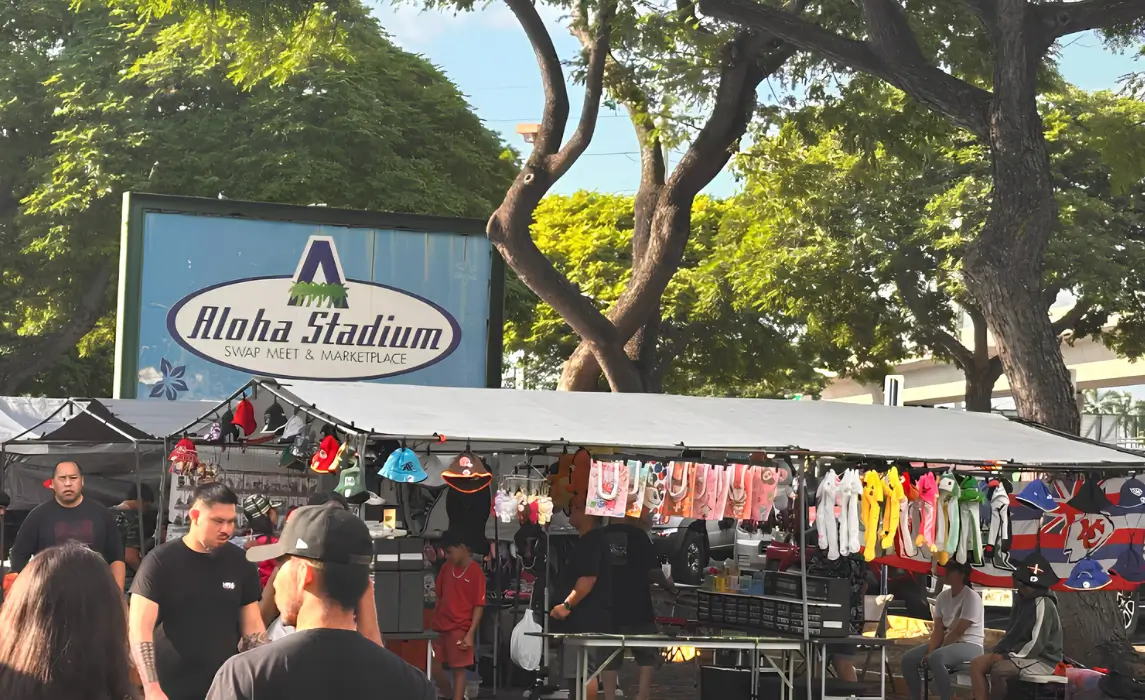
1. Aloha Stadium Swap Meet, Honolulu, Oʻahu
This is where locals shop, not just visitors. Vendors set up in the stadium's parking areas on regular days throughout the week, selling everything from local snacks to aloha wear, shell jewelry, and handmade crafts. Two honest things worth knowing going in: the market was displaced from its original stadium-perimeter footprint during the state's ongoing stadium redevelopment, so it now runs smaller and with far less shade than it used to, bring a hat and water. And not every vendor posts prices, so a quick "how much?" before you commit saves you from any confusion at checkout.
What sets it apart: the sheer number of independent vendors means the same item often turns up twice at two different prices a few stalls apart, shoppers have found a $10 shell anklet at a beach-town shop selling for two-for-$10 here. Walking the row before buying anything is the single best money-saving habit at this market. It's also one of the few places where you can hunt down genuinely local snacks, like fresh coconut apple (the soft, sweet embryo inside a mature coconut), that don't show up in stores at all.
Typical spend: entry runs $1 for Hawaiʻi residents, $2 for visitors, cash only; aloha shirts and local clothing run $8–$25; shell jewelry and small crafts run $5–$20 a piece.
2. South Shore Market, Ward Village, Honolulu, Oʻahu
Despite the name, this isn't a farmers market, it's a compact, air-conditioned indoor collection of roughly 20 locally owned boutiques and eateries in Kakaʻako's Ward Village, built with a modern warehouse-style layout, free (if sometimes crowded) parking, and pet-friendly aisles. One genuinely odd piece of local history: the building was originally slated to become a Whole Foods, but construction was delayed after human remains were discovered on site; Whole Foods relocated a block away, and this space became South Shore Market instead.
What sets it apart: it's the rare Honolulu souvenir stop that isn't trying to look like a souvenir shop, think design-forward apparel, locally themed pet goods from HakuAi Designs at Mori, and Off the Wall, a self-pour craft beer and wine bar where you tap a card and pour your own. Worth knowing upfront: this is "Honolulu pricing," so it suits gift-hunting more than bargain-hunting, go here after the swap meet, not instead of it.
Typical spend: boutique gifts and apparel run $25–$60; a self-poured glass at Off the Wall runs $8–$14.
3. Kona Farmers Market, Kailua-Kona, Big Island
Worth a visit for the fruit alone, strawberry papaya, star fruit, passion fruit (lilikoi), and local bananas and mangoes are consistently the standout here, but go in with realistic expectations about the crafts side. Several regular visitors have flagged that some of the produce appears to be bought wholesale and resold at a markup rather than grown locally, and a portion of the trinkets mixed in among genuine local crafts look mass-imported rather than handmade. Asking a vendor directly where something's from is a fair question here, not an awkward one. The market runs Wednesday through Saturday, technically opening at 7 a.m., though some vendors don't fully set up until closer to 9.
What sets it apart, and where to be careful: nearby paid parking can run $15–$20 an hour, which changes the math on what looks like a bargain trip; factor that in before assuming this beats a resort gift shop on price. If consistency matters more to you than convenience, regular visitors point to the Hilo Farmers Market on the other side of the island, or the nearby Aliʻi Gardens Marketplace, as having a more reliable mix of genuinely local vendors.
Typical spend: fresh tropical fruit runs $2–$5 per item; local crafts and jewelry run $8–$20; budget an extra $15–$20 for nearby parking if the market's own lot is full.
Frequently Asked Questions
What is the most authentic souvenir to buy in Hawaii?
Items made from local materials, koa wood, Hawaiian sea salt, or Kona coffee, tend to be the most authentic since they're tied to the islands' actual agriculture and craftsmanship, not just branding.
Can you bring fruit or plants back from Hawaii?
Certain fresh fruits (like pineapple and coconut) are allowed through agricultural inspection, but many plants, seeds, and soil are restricted. Check current USDA and Hawaii Department of Agriculture guidelines before packing any.
Where is the best place to buy souvenirs in Hawaii, resort shops or local markets?
Local farmers markets, independent galleries, and heritage brand stores generally offer better quality and prices than resort gift shops or souvenir chains, which mark up mass-produced goods.
Is Kona coffee really from Hawaii?
Only coffee labeled "100% Kona" is required to be entirely grown in the Kona district. Blends can legally contain as little as 10% Kona beans while still using the name, so check the label carefully.
Is the Aloha Stadium Swap Meet cash only?
Yes, most vendors accept cash only, and entry itself is cash-only too, $1 for Hawaiʻi residents and $2 for visitors. A few ATMs are available on site, but it's easier to bring cash with you.
Is South Shore Market a farmers market?
No, despite the name, South Shore Market is an indoor, air-conditioned collection of boutiques and eateries in Ward Village, not a produce market. Visitors looking for fresh fruit and farm goods should head to a farmers market like Hilo's or Kona's instead.
Is the Kona Farmers Market worth visiting?
It's worth it for the fresh tropical fruit, but quality and authenticity vary by vendor and day, and nearby parking can be expensive. Asking vendors directly where an item is from is a reasonable way to shop here.
{
"@context": "https://schema.org",
"@type": "FAQPage",
"mainEntity": [
{
"@type": "Question",
"name": "What is the most authentic souvenir to buy in Hawaii?",
"acceptedAnswer": {
"@type": "Answer",
"text": "Items made from local materials — koa wood, Hawaiian sea salt, or Kona coffee — tend to be the most authentic since they're tied to the islands' actual agriculture and craftsmanship, not just branding."
}
},
{
"@type": "Question",
"name": "Can you bring fruit or plants back from Hawaii?",
"acceptedAnswer": {
"@type": "Answer",
"text": "Certain fresh fruits like pineapple and coconut are allowed through agricultural inspection, but many plants, seeds, and soil are restricted. Check current USDA and Hawaii Department of Agriculture guidelines before packing any."
}
},
{
"@type": "Question",
"name": "Where is the best place to buy souvenirs in Hawaii — resort shops or local markets?",
"acceptedAnswer": {
"@type": "Answer",
"text": "Local farmers markets, independent galleries, and heritage brand stores generally offer better quality and prices than resort gift shops or souvenir chains, which mark up mass-produced goods."
}
},
{
"@type": "Question",
"name": "Is Kona coffee really from Hawaii?",
"acceptedAnswer": {
"@type": "Answer",
"text": "Only coffee labeled '100% Kona' is required to be entirely grown in the Kona district. Blends can legally contain as little as 10% Kona beans while still using the name, so check the label carefully."
}
},
{
"@type": "Question",
"name": "Is the Aloha Stadium Swap Meet cash only?",
"acceptedAnswer": {
"@type": "Answer",
"text": "Yes, most vendors accept cash only, and entry itself is cash-only too, at $1 for Hawaii residents and $2 for visitors. A few ATMs are available on site, but it's easier to bring cash with you."
}
},
{
"@type": "Question",
"name": "Is South Shore Market a farmers market?",
"acceptedAnswer": {
"@type": "Answer",
"text": "No, despite the name, South Shore Market is an indoor, air-conditioned collection of boutiques and eateries in Ward Village, not a produce market. Visitors looking for fresh fruit and farm goods should head to a farmers market like Hilo's or Kona's instead."
}
},
{
"@type": "Question",
"name": "Is the Kona Farmers Market worth visiting?",
"acceptedAnswer": {
"@type": "Answer",
"text": "It's worth it for the fresh tropical fruit, but quality and authenticity vary by vendor and day, and nearby parking can be expensive. Asking vendors directly where an item is from is a reasonable way to shop here."
}
}
]
}

.webp)
.webp)
.webp)
.webp)
%2520(1).webp)
.webp)
.webp)
.webp)
.webp)
.webp)
.webp)
.webp)
.webp)
.webp)
.webp)
.webp)
.webp)
.webp)
.webp)
.webp)
.webp)
.webp)
.webp)
.webp)
.webp)
.webp)
.webp)
.webp)
.webp)
.webp)
.webp)

.webp)