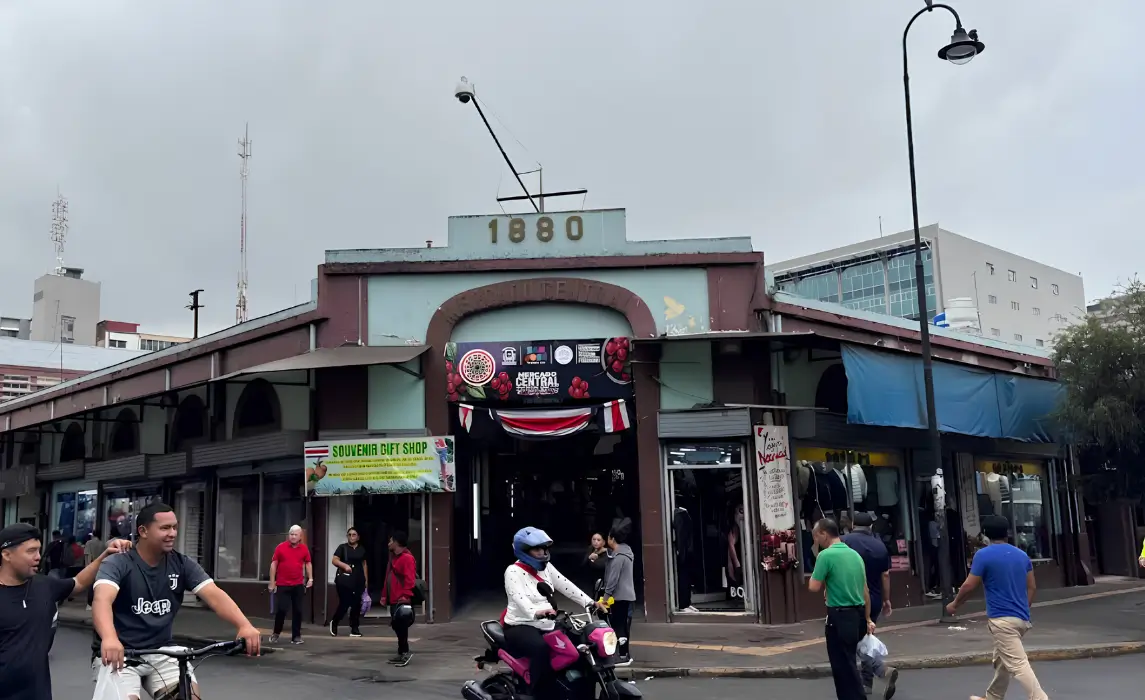
San José has four markets worth knowing, and each one serves a different kind of visitor. The Mercado Central is the best all-round first stop for food, coffee and local atmosphere. The Municipal Crafts Market (Mercado Municipal de Artesanías) is the most convenient place to buy souvenirs in one go, provided you compare stalls and bargain. Mercado Borbón is the working produce market where Costa Ricans do their weekly shopping, and it rewards confident, daytime visitors. Mercado de las Pulgas is a weekend flea market for secondhand goods, collectibles and cheap fresh produce. This guide draws on dozens of recent visitor and local reviews to explain what each market is like, what to buy, what it costs and how to stay safe.
Which San José market should you visit?
The right market depends on why you are going. Travelers who want one authentic experience with good food should choose the Mercado Central, because it combines traditional sodas (small family-run eateries), coffee roasters, spice stalls and souvenir shops under one roof. Shoppers who mainly need gifts to take home will save time at the Municipal Crafts Market, where dozens of souvenir stalls sit side by side. Visitors curious about everyday Costa Rican life, rather than tourist-facing San José, tend to prefer Mercado Borbón. Bargain hunters and collectors looking for vintage toys, coins, tools or used electronics should plan a weekend morning at Mercado de las Pulgas.
| Market |
Best For |
Atmosphere |
Price Level |
Main Caution |
| Mercado Central |
Food, coffee, spices, first-time visitors |
Busy, maze-like, historic |
Moderate; souvenirs often cheaper than the crafts market |
Pickpockets, narrow aisles |
| Municipal Crafts Market |
Souvenirs and gifts in one place |
Tourist-focused, persistent vendors |
High asking prices, negotiable |
Mass-produced imports sold as local crafts |
| Mercado Borbón |
Fresh produce, seafood, cheap local meals |
Gritty, local, authentic |
Lowest of the central markets |
Unsafe surrounding streets |
| Mercado de las Pulgas |
Secondhand goods, collectibles, produce |
Weekend flea market |
Very low, with bargaining |
Faulty or questionable goods |
San José Central Market (Mercado Central): the essential first stop
The Mercado Central is San José's best-known market and the one most visitors should see first. Its history dates back to 1880, and it still functions as a genuine neighborhood market rather than a tourist attraction built for show. Inside, a dense labyrinth of narrow corridors holds butchers, fishmongers, fruit and vegetable sellers, spice and herb stalls, leather goods, traditional clothing, flower vendors, small pharmacies and souvenir shops. Reviewers consistently describe it as lively, colorful and overwhelming in the best sense, though several admit they walked in circles before finding the exit.
The layout follows a loose logic. Souvenir vendors tend to cluster around the perimeter, while food stalls and sodas fill the center. Because the aisles are extremely narrow, the market can feel claustrophobic at peak times, and visitors with young children or large bags may find it hard to move or sit down. Seating at the sodas is limited, so a relaxed sit-down meal is easier outside the busiest hours.
What to eat and drink at the Mercado Central
Food is the main reason to visit. Reviewers single out Soda Tala for its stuffed yucca, Soda Crystal for chorreadas (sweet corn pancakes grilled and served on a banana leaf), and Flor del Carmen for traditional Costa Rican plates. Ceviche is another frequent recommendation. The market is also home to a century-old ice cream shop, the Sorbetera de Lolo Mora, which locals and travelers seek out for its distinctive spiced vanilla flavor.
Coffee lovers should look for the stalls that roast beans on site and serve coffee brewed through a traditional cloth filter, known in Costa Rica as a chorreador. Visitors describe the cloth-filtered coffee as noticeably stronger than they expected. One long-time visitor buys coffee from the vendor near the corner of Avenida 1 and Calle 8 and recommends the passion fruit (maracuyá) cheesecake at the café beside it.
Shopping and prices at the Mercado Central
Coffee, spices, nuts and leather goods are considered the best buys. Souvenirs are mostly the same items found across Costa Rica, and opinions on price are divided: some visitors found prices fair or even lower than in other towns, while others felt they paid tourist rates. Very few stalls display prices, so it helps to ask before committing. Notably, one traveler paid 9,500 colones for a chorreador coffee stand here and later saw the identical item for 20,000 colones at the Municipal Crafts Market, which suggests the Mercado Central is often the cheaper option for household and coffee-related souvenirs.
Contactless credit and debit cards are accepted at many stalls. The public restroom charges a small fee (around 300 colones), and reviewers advise keeping expectations low. Some visitors were uncomfortable with a pet stall selling birds and animals in small cages, which is worth knowing for travelers who would rather avoid it.
Read Related Article: The Ultimate Guide to Every Shopping Mall in Jakarta, Indonesia
Explore the ultimate guide to shopping malls in Jakarta, Indonesia, featuring the best destinations for shopping, dining, entertainment, and family activities.
Read More
Municipal Crafts Market (Mercado Municipal de Artesanías): souvenirs in one place
The Municipal Crafts Market is San José's dedicated souvenir market, located on a main walking avenue in the city center close to the Plaza de la Cultura. It previously stood beside the Jade Museum before being relocated. The market contains dozens of small, covered stalls selling wood carvings, leather goods, jewelry, hammocks, clothing, coffee, chocolate, art prints and novelty signs. For travelers short on time, it is the easiest way to buy gifts for family and friends in a single stop.
Reviews of this market are the most divided of the four, and the reasons are consistent. Many stalls sell identical items, and a significant share of the goods are mass-produced imports rather than Costa Rican handicrafts. One reviewer estimated that roughly half the crafts are not made in Costa Rica, so it is worth checking tags and asking vendors directly about origin. Several honest vendors will tell you which pieces are local.
Where to find authentic handmade crafts
The genuine artisan work is there, but it takes some looking. A local reviewer recommends Artesanías con Identidad at stalls 68 and 70, where the artisans themselves run the stalls and sell their own handmade pieces. Other visitors point to a hammock maker toward the back who helps customers choose a style and color, a stall with indigenous crafts near the rear of the market, and jewelers who make pieces on site, including one who resized a ring while the customer waited. Carved ironwood sculptures, fine hardwood items and leather crafts are among the most praised genuinely local products.
How to bargain at the Crafts Market
Bargaining is expected here, and opening prices are often inflated. Visitors who walked the whole market before buying, compared prices across stalls and negotiated politely report discounts of around 25 percent on average, and some say they saved half by shopping around. Buying several items from the same vendor and paying in cash both improve your leverage.
Always ask for prices in Costa Rican colones and pay in colones where possible. Many vendors accept US dollars and cards, but reviewers repeatedly warn that the exchange rate offered at stalls is poor, so paying in dollars quietly raises the price. Coffee and chocolate are one exception to the bargain rule: several visitors found the same packaged brands for half the price at supermarkets, so those are better bought elsewhere.
Even with its flaws, the market compares well against other places to buy souvenirs. Visitors found the same goods priced three to five times higher in La Fortuna and Monteverde, and one family paid 5,000 colones for children's t-shirts that cost more than 25,000 colones at the airport. The practical advice is to buy souvenirs here rather than leaving them until departure.
What to expect from vendors
Vendors at the Crafts Market are persistent, and almost every stall will invite you in as you pass. Some visitors find this exhausting, while others describe it as friendly salesmanship typical of markets worldwide. A firm, smiling "no, gracias" usually works. Many vendors here speak English, more so than at the other markets. Most stalls close early in the evening; on a weekday, visitors found half the market shuttered before 7 pm, so arriving by late afternoon is safer.
Read Related Article: 5 Alaskan Fabric, Yarn & Quilt Shops Worth Building Your Trip Around
Discover 5 must-visit fabric, yarn, and quilt shops in Alaska, featuring unique textiles, crafting supplies, quilting essentials, and local finds worth exploring.
Read More
Mercado Borbón: the local's market for fresh produce
Mercado Borbón sits a short walk from the Mercado Central and is often called its less polished twin. Where the Mercado Central has adapted to tourism, Borbón remains a working market where ordinary Costa Ricans buy their weekly fruit, vegetables, meat, seafood, grains, spices and household goods. Families have shopped here for generations, and locals praise its low prices, fresh produce and friendly, hard-working vendors.
The market is especially good for produce that is hard to find elsewhere, Panamanian chilies and seasonal fruit among them, as well as a well-regarded seafood section. Inexpensive sodas inside serve casados, the traditional Costa Rican plate of rice, beans, protein and salad, at prices locals describe as among the lowest in central San José. Pork rind empanadas are another favorite. On the second floor, artisans sell and repair the religious figures used in Costa Rican nativity scenes, a detail few travelers know about.
Is Mercado Borbón safe for tourists?
Mercado Borbón is worth visiting for travelers comfortable in busy urban settings, but it requires more caution than the other markets. Locals and visitors alike describe the surrounding streets as rough, noting homelessness, street drug activity and proximity to the red-light district. The building itself has aging infrastructure, some dark or closed-off corners, and strong smells in certain areas. Several locals say conditions have improved recently, and many shoppers report no trouble inside the market.
The sensible approach is to visit during daylight, dress plainly, leave valuables at the hotel, avoid using your phone on the street, and keep moving with purpose. Joining a walking tour is an easy way to see Borbón with a guide who knows the area. A little Spanish helps, since prices are often unmarked and vendors are less likely to speak English. Saturdays are the most crowded day, while weekdays offer more room to browse.
Mercado de las Pulgas: San José's weekend flea market
Mercado de las Pulgas is San José's flea market, held inside the city's wholesale market grounds next to the Municipality of San José. It mixes a regular fruit and vegetable market with a sprawling weekend sale of new and secondhand goods. On flea market days, stalls sell clothing, shoes, tools, car parts, appliances, toiletries, books, fishing gear, games and consoles, alongside collectibles such as coins, stamps, old photographs, vintage toys from the 1970s onward, Hot Wheels and Funko Pop figures.
The flea market runs mainly on weekend mornings, with visitors citing hours of roughly 6 am to 1 pm, although some report activity at other times, so it is worth confirming before you go. Arriving early gives the best chance of finding something special, and the market has municipal parking, security guards, restrooms and a small food area.
The main risk is product quality. Several shoppers bought electronics or tools that failed shortly afterward, and some reviewers suspect that a portion of the used goods, particularly car parts, may not be legitimately sourced. Test anything electrical before paying, inspect items carefully, and keep a close watch on your belongings in the crowded, narrow passages. For produce, however, regular shoppers say the fruit and vegetables are fresher and much cheaper than in supermarkets.
Practical tips for visiting San José's markets
Money is the first thing to plan. Carry colones in small denominations, because cash gives you better bargaining power and avoids the weak exchange rates many vendors apply to dollars. Contactless cards are widely accepted at the Mercado Central and the Crafts Market, but less so at Borbón and the flea market.
Safety advice is consistent across every review. Keep your phone, wallet and bag in front of you, carry only what you need, and stay alert in crowded aisles where pickpockets operate. The markets are best visited in daylight, and travelers unfamiliar with the city may prefer a guided food or market tour, which several reviewers described as the highlight of their time in San José.
Getting there is easiest by taxi or rideshare. Downtown traffic is chaotic and street parking is scarce, so drivers should use a paid lot near the Mercado Central or the parking lots across from Borbón. Finally, learning a few Spanish phrases goes a long way. Vendors at the local markets are patient with beginners, and even basic Spanish makes asking prices and declining politely much easier.
Frequently asked questions
What is the best market in San José, Costa Rica?
For most visitors, the Mercado Central is the best market in San José because it combines traditional food, coffee, spices and souvenirs in a historic building dating to 1880. Travelers focused purely on souvenirs may prefer the Municipal Crafts Market, while those wanting the most local experience should visit Mercado Borbón.
Where is the cheapest place to buy souvenirs in San José?
The Mercado Central and the Municipal Crafts Market are both far cheaper than the airport or tourist towns such as La Fortuna and Monteverde. Household items like chorreador coffee stands are often cheaper at the Mercado Central, while the Crafts Market offers more choice and room to bargain. Packaged coffee and chocolate are usually cheapest at supermarkets.
Are the crafts at the Municipal Crafts Market really made in Costa Rica?
Not all of them. Visitors estimate that around half the items are imported and mass-produced. Look for artisan-run stalls such as Artesanías con Identidad (stalls 68 and 70), check tags, and ask vendors where each piece was made.
Should I pay in dollars or colones at San José markets?
Pay in colones whenever possible. Most vendors accept US dollars, but the exchange rate offered at stalls is usually unfavorable, which effectively raises the price.
Is it safe to visit markets in downtown San José?
The markets are generally safe during the day with normal precautions, but pickpocketing is common in crowded aisles. Mercado Borbón's surroundings call for extra care, so visit in daylight, carry minimal valuables and avoid using your phone on the street.
When is Mercado de las Pulgas open?
Visitors report that the flea market operates mainly on weekend mornings, from about 6 am to 1 pm, while the produce section runs more regularly. Hours can change, so confirm locally before making the trip.
Do vendors speak English?
Many vendors at the Municipal Crafts Market speak English. English is less common at the Mercado Central and Mercado Borbón, where basic Spanish is helpful, though vendors are typically patient with visitors who try.